English
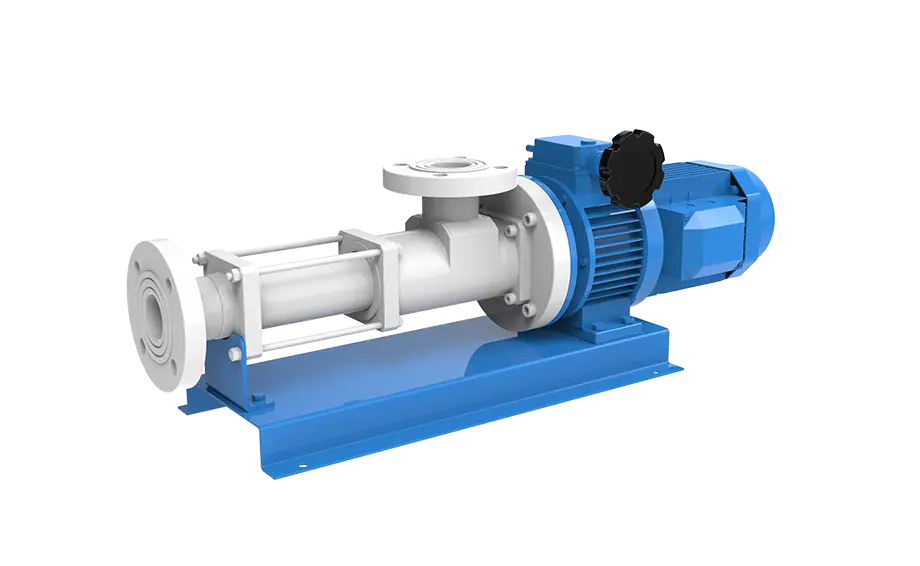
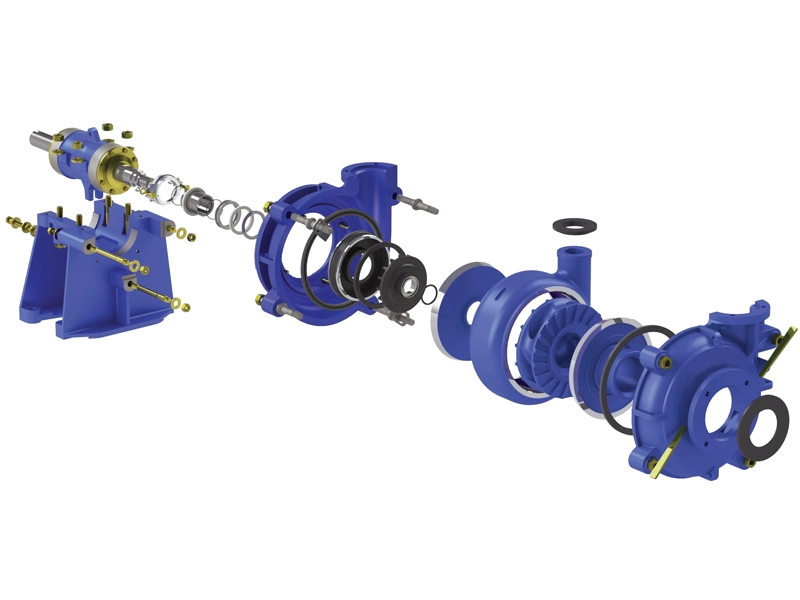
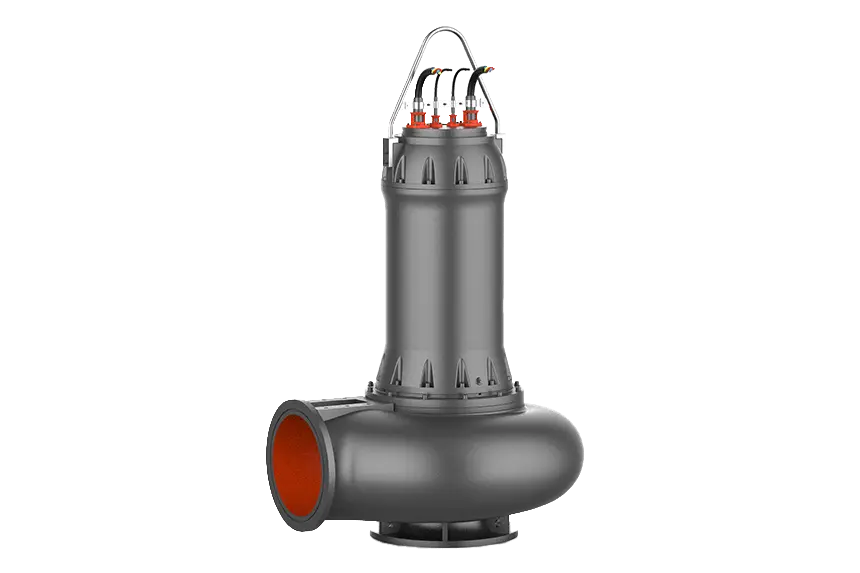
For municipal engineers, industrial plant managers, mining operators, and facility management teams sourcing wastewater pumping equipment, the selection of the right submersible sewage pump is not a commodity procurement decision — it is a system reliability decision with direct consequences for operational continuity, maintenance cost, environmental compliance, and safety. The most common and most costly mistake in wastewater pump procurement is treating all sewage as the same fluid and selecting a pump based primarily on flow rate, head, and price — without adequately evaluating the specific characteristics of the wastewater that will determine whether the pump performs reliably for years or fails within months.
Raw municipal sewage, chemical plant wastewater, mine drainage, food processing effluent, textile factory wastewater, and hospital drainage are fundamentally different fluids with different failure mechanisms. A pump that performs reliably in municipal sewage may clog immediately in textile wastewater containing long fibers. A cast iron pump that handles municipal drainage adequately may corrode rapidly in chemical wastewater. A standard sewage pump that works well in a hotel basement sump may wear out quickly in mine drainage containing abrasive grit and sand. The right submersible sewage pump for each application is the one whose impeller design, material construction, sealing system, and monitoring capability are matched to the specific characteristics of the fluid it will handle.
For global buyers sourcing submersible sewage pump China solutions, Lubor's WQ series submersible sewage pump is designed for draining sewage, wastewater, rainwater, and domestic water containing solids and long fabrics in municipal works, industrial buildings, hotels, hospitals, civil air defense projects, and mines — with intelligent monitoring, non-overload hydraulic design, anti-winding solid-passing performance, and mechanical seal protection for demanding applications. This guide covers the complete picture for B2B procurement teams: why corrosive and gritty fluids cause pump failure, what a submersible sewage pump is and how it differs from a clean water pump, how impeller design, sealing systems, and monitoring technology handle difficult fluids, how to select between cast iron and stainless steel construction and between cutter and non-cutter impeller designs, and what procurement and maintenance practices protect pump reliability over the system's service life. Secondary keywords relevant to this decision — submersible sewage pump selection, cast iron vs stainless steel pump, abrasive fluid handling, fiber-cutting sewage pump, and chemical resistant submersible pump — are addressed throughout.
The commercial case for investing in proper submersible sewage pump selection — rather than defaulting to the lowest-cost option — starts with a clear understanding of the specific failure mechanisms that different wastewater types create, and why these failures create consequences that far exceed the cost of correct pump selection.
Impeller clogging from long fibers and rags is the most common failure mode in municipal sewage and textile wastewater applications. Long fibers — from wipes, rags, cloth, hair, rope, and plastic strips — wrap around the impeller and shaft, progressively restricting flow until the pump overloads, overheats, and fails. In a municipal lift station or hotel basement sump where the pump operates continuously, a clogging event that requires manual cleaning and pump removal creates significant operational disruption and maintenance cost. In a remote mining or civil infrastructure application where maintenance access is difficult, a clogging failure can create wastewater overflow with environmental compliance consequences.
Impeller and casing wear from abrasive particles is the primary failure mechanism in mine drainage, construction site dewatering, and industrial drainage applications where sand, grit, and abrasive particles are present in the wastewater. Abrasive particles erode the impeller vanes, volute casing, and mechanical seal faces — progressively reducing pump efficiency, increasing clearances, and ultimately causing hydraulic performance degradation and seal failure. The wear rate depends on particle hardness, concentration, size, and flow velocity — and in high-grit applications, a standard sewage pump may require impeller replacement within months rather than years.
Corrosion from chemical wastewater is the primary failure mechanism in chemical plant drainage, industrial process wastewater, and applications where pH, dissolved chemicals, or aggressive ions attack the pump materials. Cast iron construction that is adequate for municipal sewage may corrode rapidly in acidic or alkaline chemical wastewater — creating material loss, surface pitting, and ultimately structural failure of the pump casing, impeller, and mechanical seal components. Selecting the wrong material for a chemical wastewater application is not a minor quality issue — it is a safety risk and an environmental compliance risk.
Mechanical seal failure from solids deposition is a failure mechanism that affects all sewage pump applications but is most severe in fluids with high solids content, abrasive particles, or chemical aggressiveness. Solids that deposit around the mechanical seal faces create abrasion and uneven loading that accelerates seal wear and ultimately allows wastewater to enter the motor chamber — causing motor winding failure and complete pump loss.
A failed submersible sewage pump in a critical wastewater application creates consequences that extend well beyond the cost of the pump itself. Wastewater overflow from a failed lift station creates environmental compliance violations and potential regulatory penalties. Production shutdown in an industrial plant caused by a failed drainage pump creates lost production value that can be orders of magnitude larger than the pump replacement cost. Emergency maintenance at a remote or difficult-to-access site creates mobilization costs, safety risks, and operational disruption that dwarf the cost of correct pump selection.
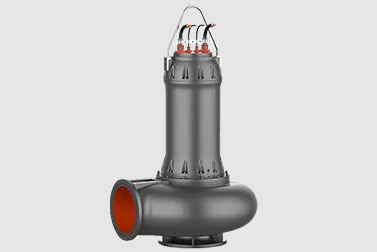
Understanding what a submersible sewage pump is — and how its design differs from a clean water pump in the specific ways that matter for difficult wastewater service — is essential context for evaluating pump selection options for corrosive, gritty, and fibrous fluid applications.
A submersible sewage pump is a pump designed to operate while fully or partially submerged in wastewater. The motor and pump body are integrated into a sealed unit, allowing the pump to move sewage, wastewater, rainwater, and sludge-containing fluids from sumps, tanks, lift stations, basements, drainage pits, and treatment systems without requiring a dry motor room or long suction piping. The submerged installation simplifies the installation in wet wells and drainage pits, eliminates suction lift limitations, and allows the pump to handle fluids that would be difficult or impossible to move with a surface-mounted pump.
The critical design differences between a submersible sewage pump and a clean water pump are not cosmetic — they are fundamental engineering choices that determine whether the pump can handle the solids, fibers, abrasives, and corrosive chemicals present in real wastewater applications.
| Design Feature | Clean Water Pump | Submersible Sewage Pump |
|---|---|---|
| Fluid type | Clean or lightly contaminated water | Sewage, wastewater, sludge, grit, solids, fibers |
| Impeller design | Efficiency-optimized, tight clearances | Anti-clog, cutting, vortex, or channel design with solids passage |
| Seal system | Standard — clean fluid environment | Reinforced — must exclude wastewater from motor chamber |
| Material selection | Standard — clean fluid corrosion only | Application-specific — cast iron, stainless steel, or specialty alloys |
| Motor protection | Standard overload protection | Leakage detection, temperature monitoring, vibration sensing |
| Solids handling | Limited — not designed for solids | Designed for specified solids size and fiber content |
Lubor's WQ series submersible sewage pump is designed for municipal works, industrial buildings, hotels, hospitals, civil air defense projects, and mines — applications that represent the full spectrum of difficult wastewater conditions from municipal raw sewage with long fibers to mine drainage with abrasive grit. The WQ series incorporates intelligent monitoring with integrated vibration sensor, bearing temperature PT100, winding temperature PT100, oil chamber leakage detection, and motor cavity leakage detection — providing the real-time condition monitoring that critical wastewater applications require for reliable operation and early fault detection.
The technical mechanism by which submersible sewage pump design addresses the specific challenges of fibrous, abrasive, and corrosive wastewater — and why impeller design, sealing technology, and intelligent monitoring are the three most important technical differentiators in sewage pump selection — is the core engineering knowledge that procurement teams need to evaluate pump options for difficult fluid applications.
The impeller is the most critical component in a submersible sewage pump for difficult wastewater service — its design determines whether the pump can pass solids without clogging, handle long fibers without wrapping, and maintain hydraulic efficiency under the variable solids loading of real wastewater conditions. Lubor describes its WQ pump impeller as developed through CFD research and testing to balance blade design with solid-passing ability, supporting fiber handling and anti-winding performance — a design approach that addresses the fundamental tension between hydraulic efficiency and solids passage capability.
For applications with long fibers, rags, and cloth — municipal sewage, hotel and hospital drainage, textile wastewater — a fiber-cutting sewage pump with a cutting mechanism at the impeller inlet can reduce or eliminate the clogging risk that standard impeller designs face. The cutting mechanism breaks down long fibers before they reach the impeller, preventing the wrapping and clogging that causes the most common failure mode in fibrous wastewater service.
For applications with abrasive particles — mine drainage, construction site dewatering, industrial grit-laden wastewater — the impeller material and clearance design must be selected for wear resistance rather than hydraulic efficiency alone. Abrasion-resistant impeller materials and wider clearances that reduce particle contact velocity can significantly extend impeller service life in high-grit applications.
The mechanical seal is the critical barrier between the wastewater and the motor chamber — and seal failure is the most common cause of motor damage in submersible sewage pump service. Lubor highlights an original pump seal design and mechanical seal self-cleaning technology to reduce particle deposition around the seal and extend seal life — addressing the specific failure mechanism of solids deposition around the seal faces that accelerates wear and causes premature seal failure in high-solids wastewater.
The seal face material selection is equally important for chemical wastewater applications. Silicon carbide seal faces provide better chemical resistance and hardness than standard ceramic faces — making them the preferred choice for chemical wastewater, acidic drainage, and applications where abrasive particles and chemical aggressiveness appear together.
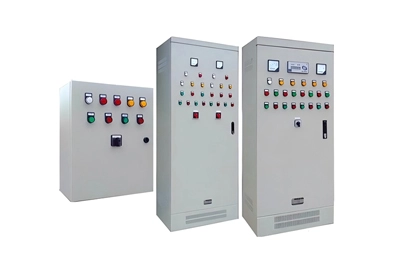
Lubor's WQ pump intelligent monitoring configuration — integrating vibration sensor, bearing temperature PT100, winding temperature PT100, oil chamber leakage detection, and motor cavity leakage detection — provides the real-time condition data that allows operators to detect developing problems before they cause catastrophic failure. Real-time data displayed through an intelligent control cabinet with alarm and automatic stop functions means that a developing seal leak, bearing overheating, or motor winding temperature rise can trigger an alarm and controlled shutdown before it causes complete motor failure — avoiding the emergency replacement cost and operational disruption of an unplanned catastrophic failure.
The practical selection of the right submersible sewage pump for a specific wastewater application requires a systematic evaluation of the fluid characteristics, failure risk profile, and performance requirements of the application — and a clear understanding of how different pump configurations address different failure mechanisms.
The choice between cast iron and stainless steel pump construction is the most fundamental material selection decision in submersible sewage pump procurement — and it is a decision that must be based on the specific corrosion characteristics of the wastewater, not on general preference or cost alone.
| Selection Factor | Cast Iron Pump | Stainless Steel Pump |
|---|---|---|
| Best application | Municipal sewage, rainwater, general domestic wastewater | Chemical wastewater, corrosive industrial drainage, food and pharmaceutical effluent |
| Corrosion resistance | Adequate for neutral to mildly corrosive sewage | Strong resistance to acids, alkalis, salts, and industrial chemicals |
| Abrasion resistance | Good for general sewage duty | Depends on stainless grade — 316L provides better corrosion resistance |
| Cost | More economical upfront | Higher upfront cost — justified by corrosion resistance in aggressive fluids |
| Typical pH range | Approximately 6 to 9 | Wider range — suitable for more aggressive pH conditions |
| Buyer risk | Coating condition and corrosion in aggressive fluids | Correct stainless grade selection for specific chemical environment |
| Pump Configuration | Best Application | Primary Advantage | Key Consideration |
|---|---|---|---|
| Standard channel impeller | Municipal sewage with passable solids | Good flow capacity and efficiency | May clog in heavy fiber environments |
| Vortex impeller | Dirty water with mixed solids | Reduced direct impeller contact with solids | Lower hydraulic efficiency |
| Fiber-cutting sewage pump | Rags, wipes, cloth, long fibers, hair | Cuts fibrous waste before impeller contact | Cutter wear requires periodic inspection |
| Chemical resistant submersible pump | Corrosive chemical wastewater | Material compatibility with aggressive fluids | Higher material cost — justified by corrosion protection |
| Abrasion-resistant configuration | Mine drainage, grit-laden industrial wastewater | Extended wear life in high-particle environments | Requires correct material and clearance specification |
| Wastewater Type | Primary Risk | Recommended Configuration |
|---|---|---|
| Municipal raw sewage | Long fibers, rags, mixed solids | Anti-clog channel impeller or fiber-cutting sewage pump |
| Hotel and hospital drainage | Mixed solids, wipes, fibers | Anti-winding impeller with reliable sealing |
| Mine drainage | Sand, grit, abrasive particles | Abrasion-resistant impeller and casing materials |
| Chemical plant wastewater | Corrosion from acids, alkalis, solvents | Stainless steel chemical resistant submersible pump |
| Textile factory wastewater | Long fibers, cloth strips | Fiber-cutting sewage pump with anti-winding design |
| Food processing effluent | Grease, food scraps, mixed solids | Anti-clog design with easy maintenance access |
| Construction site dewatering | Grit, sand, concrete particles | Abrasive fluid handling configuration |
| Industrial drainage pit | Variable solids, chemicals, mixed conditions | Customized material and impeller selection |
Correct submersible sewage pump selection delivers the most operational and financial value in: municipal wastewater lift stations where pump failure creates overflow and environmental compliance risk, industrial plants where drainage pump failure causes production shutdown, mining operations where remote location makes emergency maintenance particularly costly, hospitals and hotels where continuous drainage reliability is a safety and operational requirement, chemical plants where incorrect material selection creates corrosion failure and safety risk, and textile and food processing facilities where fibrous or greasy wastewater creates clogging risk that standard pumps cannot manage.
Selecting and procuring the right submersible sewage pump for a difficult wastewater application requires systematic pre-procurement evaluation of both fluid characteristics and pump technical capability — and ongoing maintenance practices that protect pump reliability and service life in demanding operating conditions.
Before placing a submersible sewage pump order, buyers should confirm the following:
Confirm the wastewater composition — solids content, fiber content, abrasive particle size and concentration, pH value, chemical content, temperature, and specific gravity — these parameters determine the impeller design, material selection, and seal specification
Confirm the maximum solid size that the pump must pass — this determines the minimum hydraulic passage size and impeller design
Confirm whether long fibers, rags, wipes, cloth, or rope-like materials are present — if yes, confirm whether a fiber-cutting sewage pump or anti-winding impeller design is required
Confirm the pH value and chemical composition of the wastewater — if pH is outside the range of 6 to 9, or if aggressive chemicals are present, confirm whether stainless steel or specialty alloy construction is required
Confirm the required flow rate and total head — including static head, pipe friction losses, and any backpressure from the discharge system
Confirm the sump or wet well depth and the required submersion depth
Confirm the installation method — fixed installation with guide rail system, portable installation, or auto-coupling installation
Confirm whether automatic level control is required — float switch, level sensor, or intelligent control cabinet integration
Confirm whether remote monitoring or SCADA communication is required
Confirm the voltage, frequency, and phase of the available power supply
Confirm whether explosion-proof motor construction is required for the installation environment
Confirm the cable length required for the installation depth and routing
Request documentation including pump performance curves, material certificates, test reports, and dimensional drawings
Confirm spare parts availability — impeller, mechanical seal kit, cable, and level control components for critical applications
Inspect the pump regularly for abnormal vibration, noise, and motor current — deviations from normal operating values provide early warning of developing problems
Check insulation resistance before restarting after extended shutdowns — moisture ingress during shutdown can reduce insulation resistance to unsafe levels
Clean the sump or wet well regularly to reduce excessive grit and debris accumulation that accelerates impeller and seal wear
Inspect cutter or impeller wear at regular intervals in fibrous or abrasive service — worn cutters lose their cutting effectiveness and worn impellers reduce hydraulic performance
Check mechanical seal condition and monitor oil chamber leakage alarms — early detection of seal leakage allows planned seal replacement before motor damage occurs
Monitor bearing temperature and winding temperature through the intelligent monitoring system — temperature trends provide early warning of bearing deterioration and motor overloading
Avoid dry running — confirm that the pump is adequately submerged before starting and that the wet well level control system is functioning correctly
Inspect cables, cable entry seals, and lifting chains at regular maintenance intervals — cable damage is a common cause of motor failure in submersible pump service
Clean level sensors and float switches regularly — fouled sensors cause incorrect level control and can allow the pump to run dry or overflow the wet well
Keep a spare impeller, mechanical seal kit, cable, and level control components on site for critical applications — the ability to restore pump operation quickly after a failure is essential for applications where downtime creates serious operational consequences
Record operating hours, maintenance events, and performance data for predictive maintenance planning — trending data allows maintenance teams to anticipate component replacement needs before failure occurs
For wastewater applications ranging from municipal lift stations to chemical plant drainage and mine dewatering, there is no universal submersible sewage pump solution. The right pump for each application is the one whose impeller design handles the specific solids and fibers present, whose material construction resists the specific corrosion and abrasion mechanisms of the fluid, whose sealing system protects the motor from the specific contamination risks of the wastewater, and whose monitoring capability provides the early warning data that prevents catastrophic failure in critical applications.
Lubor's WQ series submersible sewage pump supports wastewater, sewage, rainwater, and domestic water containing solids and long fabrics — with intelligent monitoring, non-overload hydraulic design, anti-winding solid-passing performance, and mechanical seal protection for demanding municipal, industrial, mining, and commercial applications. For global buyers sourcing submersible sewage pump China solutions, Lubor offers customized material selection, impeller configuration, and control system integration to match the specific requirements of corrosive, gritty, and fiber-heavy wastewater applications.
Contact Lubor Pump today to share your wastewater composition, solids size, pH value, fiber content, flow rate, head, installation depth, material preference, and control requirements. Lubor can help evaluate a customized submersible sewage pump solution for your specific application — and provide the technical documentation, performance data, and after-sales support that critical wastewater infrastructure requires.
<p style="margin: 0