English
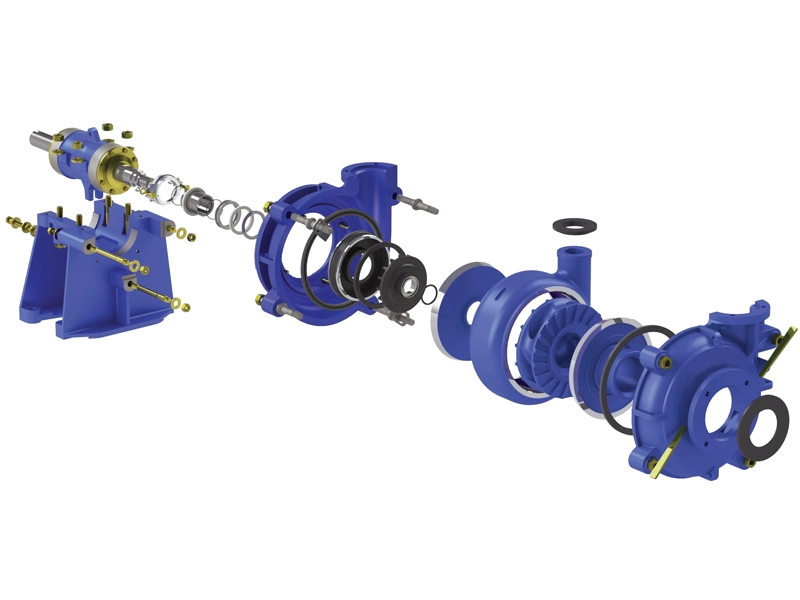
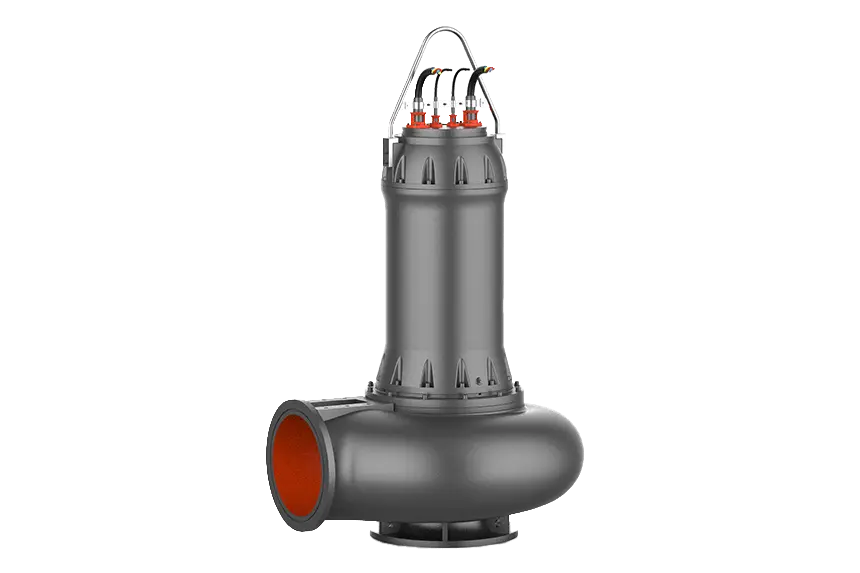
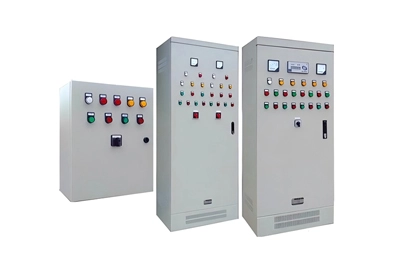
Municipal water supply and flood-control infrastructure operates under a simple but unforgiving requirement: it cannot stop. When a primary pump fails at a high-lift station or flood-control facility, the consequences extend far beyond the pump room—water pressure drops across distribution zones, firefighting reserves become uncertain, and stormwater response capacity shrinks exactly when it is needed most.
That is why utilities and EPC teams continue to specify the split case pump platform for critical municipal duties. Configurations aligned with API 610 BB1 practices add a layer of engineering discipline—frame robustness, documented QA, and maintainability standards—that translates directly into longer service intervals and faster recovery when maintenance is required. As urban water demand grows and reliability KPIs tighten heading into 2026, the case for specifying the right pump from the start has never been stronger.
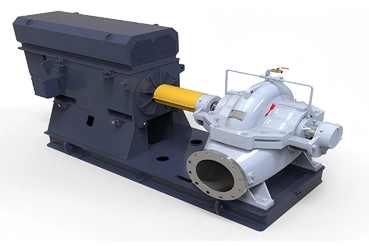
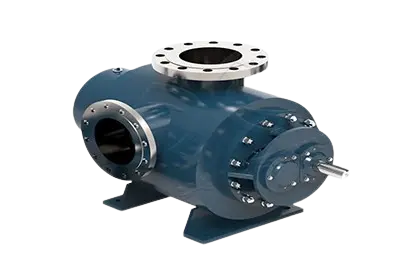
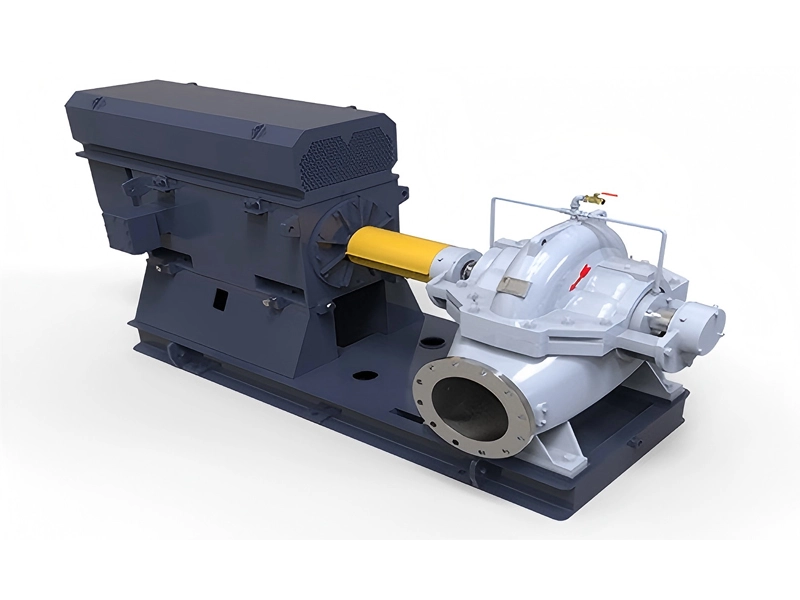
The reliability of a split case pump starts with its casing geometry. The axially split design divides the casing into top and bottom halves along the shaft centerline. Removing the top cover gives full access to the impeller, bearings, and seals without disturbing the suction or discharge piping—a critical advantage in municipal stations where piping disconnection means extended outages and civil disruption.
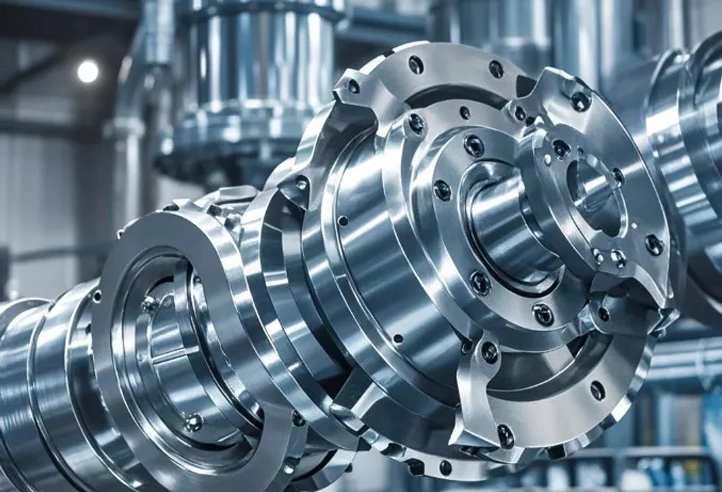
The double-suction impeller, standard on most BB1-type configurations, draws flow equally from both sides of the impeller eye. This symmetrical arrangement balances axial thrust across the shaft, reduces bearing loads, and improves hydraulic stability at the high flow rates typical of water supply and flood-control duties. The result is lower vibration, longer bearing life, and more predictable behavior across varying demand profiles.
The symmetrical flow path also distributes velocity more evenly through the casing, reducing the localized low-pressure zones that trigger cavitation when suction conditions are marginal. Combined with the robust shaft and bearing support required under API 610 BB1 practices, this design is built to sustain continuous operation across decades of service—not just years.
Selecting the right configuration requires locking the hydraulic and mechanical parameters before approaching a supplier. The table below covers the specifications that most directly affect long-term reliability and cost.
| Parameter | What to Define | Why It Matters |
|---|---|---|
| Hydraulic duty point | Flow (Q), head (H), min/normal/max envelope, BEP target | Operating far from BEP raises vibration and accelerates wear |
| NPSH margin | NPSHa vs NPSHr across full operating range | Insufficient margin causes cavitation and impeller damage |
| Materials of construction | Cast iron, ductile iron, or stainless based on water chemistry | Chlorides, pH, and corrosion allowance drive material selection |
| Sealing configuration | Packing vs mechanical seal, bearing type, lubrication plan | Determines maintenance frequency and seal-related downtime |
| Drive and controls | Motor sizing, VFD range, soft-start, minimum flow protection | VFD operation must stay within allowable speed range to protect hydraulics |
| API 610 BB1 alignment | Frame robustness, QA documentation, maintainability standards | Confirms engineering discipline behind the build |
NPSH margin deserves particular attention in municipal applications. Water level in reservoirs and intake structures varies seasonally and during emergency drawdown events. The pump must maintain adequate NPSHa margin not just at normal operating level but at the lowest credible suction condition. Undersizing this margin is the most common cause of cavitation damage on municipal installations.
The split case pump earns its place in municipal infrastructure through a combination of hydraulic capability and practical maintainability that few alternatives match at equivalent flow rates.
Urban water distribution booster stations rely on pressure stability across peak demand cycles—morning and evening surges, fire flow events, and seasonal peaks. The double-suction hydraulics of a BB1-type pump handle these flow variations with less sensitivity to operating point shift than single-suction alternatives, maintaining stable discharge pressure without excessive vibration.
Water treatment plant high-lift pumping runs continuously, often 24 hours a day, 365 days a year. The axially split casing means planned bearing and seal maintenance can be completed in a fraction of the time required on end-suction pumps at similar flow rates, reducing the planned outage window and the risk of extending into unplanned territory.
Flood-control and drainage pumping demands reliable high-volume performance under emergency conditions—often after extended standby periods. The API 610 BB1 design discipline, including documented testing and QA, provides confidence that the pump will perform when called upon after weeks or months of standby.
Firefighting water systems at large municipal facilities benefit from the same dependability. When demand spikes, the pump must respond immediately and sustain flow without pressure instability.
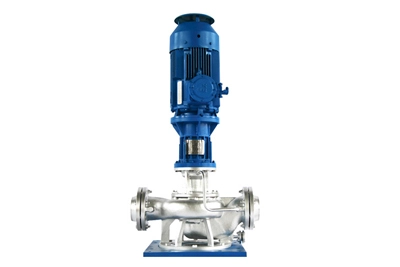
Compared to end-suction pumps at similar flow rates, the split case platform offers easier maintenance access and better axial thrust balance. Compared to vertical turbine pumps, it requires less specialized civil infrastructure and is more accessible for in-station maintenance without lifting equipment.
Provide these inputs to your engineering team and supplier before finalizing the specification:
Required flow and head at normal, minimum, and maximum demand, including seasonal profile
Suction conditions: NPSHa at lowest credible water level, intake losses, and transient scenarios such as low reservoir or intake fouling
Pump speed options and VFD operating range—avoid extended operation below 70% or above 105% of BEP flow
Piping layout, support points, and strain-free alignment requirements
Noise and vibration limits, and any monitoring instrumentation requirements
Foundation grouting and baseplate leveling are the starting point. A poorly grouted baseplate transmits vibration into the structure and accelerates bearing wear regardless of how well the pump is aligned. Follow the manufacturer's grouting procedure before any alignment work begins.
Perform cold alignment after grouting and verify hot alignment after the first operating cycle if thermal growth is significant. Misalignment is a leading cause of premature bearing and seal failure on horizontal pumps.
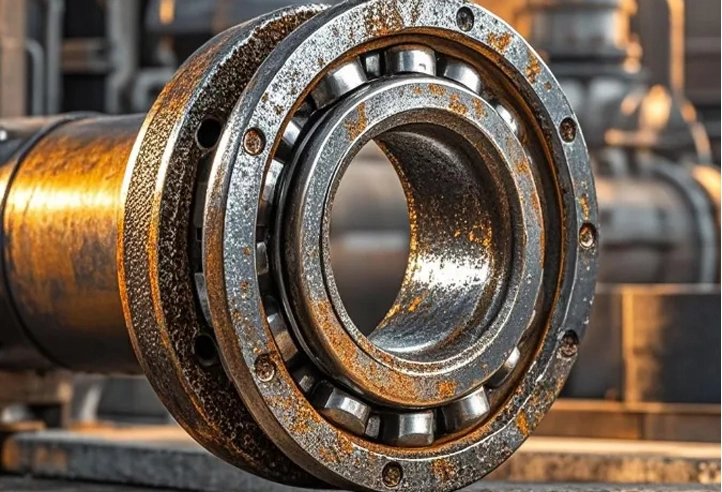
Install intake screening appropriate for the water source. Debris that reaches the impeller damages wear rings and seals, and fine sediment accelerates internal clearance wear over time. Commission with clean water where possible, and establish a vibration baseline during the first operating run for future trending reference.
The defining maintenance advantage of the split case pump is access speed. Removing the top casing half exposes the impeller, wear rings, bearings, and seals without disconnecting suction or discharge piping. On a large municipal pump, this difference can reduce a planned overhaul from a multi-day piping disconnection event to a single-shift inspection and reassembly. Over a 20-year service life with planned maintenance every two to three years, that time saving compounds into a significant reduction in total maintenance labor and station downtime.
| Cost Driver | Split Case Pump Advantage |
|---|---|
| Planned maintenance downtime | Shorter outage window due to top-cover access |
| Energy cost | Stable efficiency near BEP reduces kWh per m³ over lifecycle |
| Parts standardization | Common bearing and seal sets across multiple stations reduce inventory |
| Emergency repair frequency | Robust BB1 design reduces unplanned failure rate |
| Predictive maintenance readiness | Vibration, temperature, and pressure trending supports condition-based intervals |
For utilities managing multiple pump stations, parts standardization across API 610 BB1 frames is a meaningful TCO lever. Stocking a common bearing set and seal kit that fits pumps across several stations reduces inventory investment and eliminates the risk of a critical spare being unavailable at the wrong station during an emergency.
Reliability KPIs to track: MTBF, unplanned outage rate, energy consumption per m³ pumped, and mean time to restore service after a planned or unplanned maintenance event. These four metrics capture the full lifecycle cost picture and provide the data needed to justify capital investment in higher-specification equipment.
For municipal water supply and flood-control, reliability is not a feature—it is the operating requirement. A properly sized API 610 BB1 split case pump helps cities maintain pressure, protect treatment capacity, and respond to storm events with less downtime risk. The real win comes from correct hydraulic selection—adequate NPSH margin, operation near BEP, robust materials—and an installation and maintenance plan built for decades of service, not just the commissioning certificate.
Visit the BB1 Split Case Pump Product Page and submit the details below to receive a recommended configuration and quotation:
Work conditions: Raw or treated water, temperature, water chemistry, intake conditions, indoor or outdoor station, flooding risk
Quantity: Number of stations and pumps, duty/standby scheme, expansion plan
Size and spec: Flow, head, speed, suction and discharge sizes, material requirements, seal type, motor voltage and Hz, VFD yes or no
Target metrics: MTBF goal, efficiency target, allowable vibration and noise, service interval target
Current problem: Cavitation, vibration, frequent seal or bearing issues, low efficiency, unstable pressure, difficult maintenance access
1. What is a split case pump?
A split case pump is a centrifugal pump with an axially split casing—top and bottom halves—that allows full internal access without disconnecting the process piping. It is widely used in municipal water supply and flood-control applications for its high-flow capability and maintainability.
2. How does a split case pump compare to an end-suction or vertical turbine pump?
End-suction pumps are compact and cost-effective but offer less maintenance access and less favorable axial thrust balance at high flows. Vertical turbine pumps suit deep-well and submerged intake applications but require more specialized civil infrastructure and lifting equipment for maintenance. The split case pump offers a strong balance of high-flow efficiency, in-station maintainability, and hydraulic stability for surface-mounted municipal duties.
3. What ROI and payback can utilities expect?
ROI comes from reduced planned maintenance downtime, fewer emergency repairs, stable efficiency over the operating lifecycle, and parts standardization across stations. Utilities with aging end-suction fleets experiencing frequent seal and bearing failures typically see the fastest payback. Submit your current failure and downtime data on the API 610 BB1 product page for a tailored estimate.
4. Do we need to modify our pump station to install a BB1 split case pump?
Often minimal changes are required if the duty point, nozzle connections, and baseplate footprint are compatible with the existing station layout. Hydraulic and civil checks—nozzle elevations, foundation load, piping alignment—are essential before finalizing the replacement scope. Learn more on the split case pump product page.
5. What parameters should we provide for accurate selection and quoting?
To receive a precise recommendation, submit the following on the API 610 BB1 product page: flow and head range at normal, minimum, and maximum demand; suction conditions including NPSHa at the lowest credible water level and estimated intake losses; water type, chemistry, and operating temperature; station layout constraints, preferred materials, and seal type; motor voltage, frequency, and whether VFD control is required; number of pumps and stations; and a description of any current failure modes such as cavitation, pressure instability, or frequent bearing and seal issues—the more detail you provide, the more accurate the configuration and quotation will be.