English
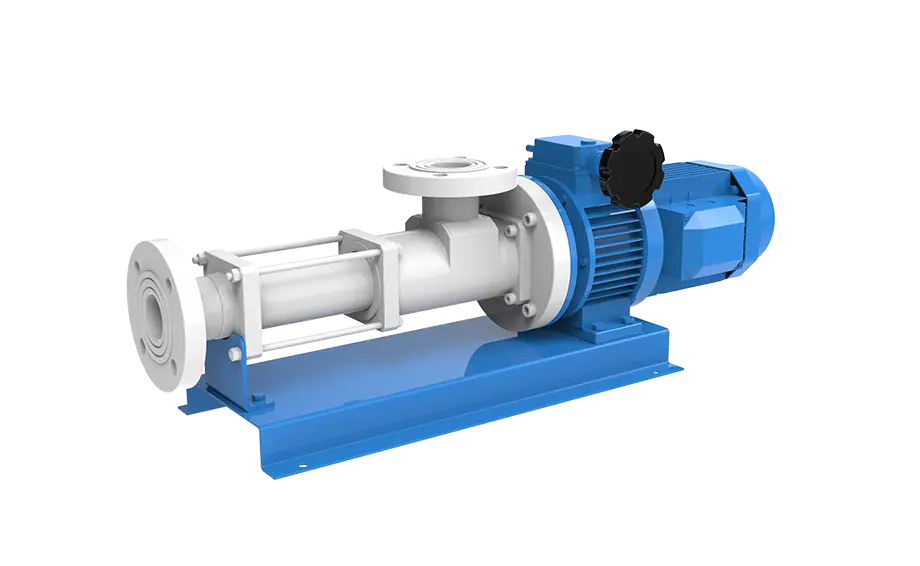
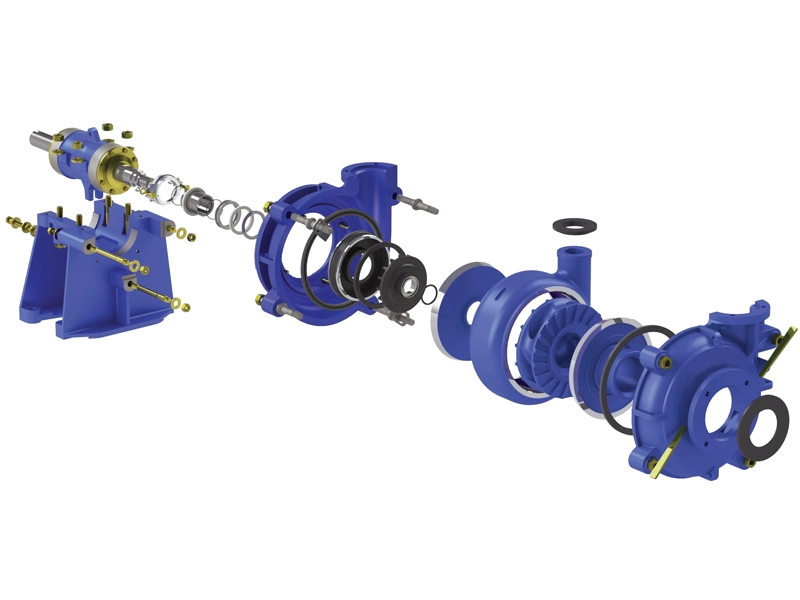
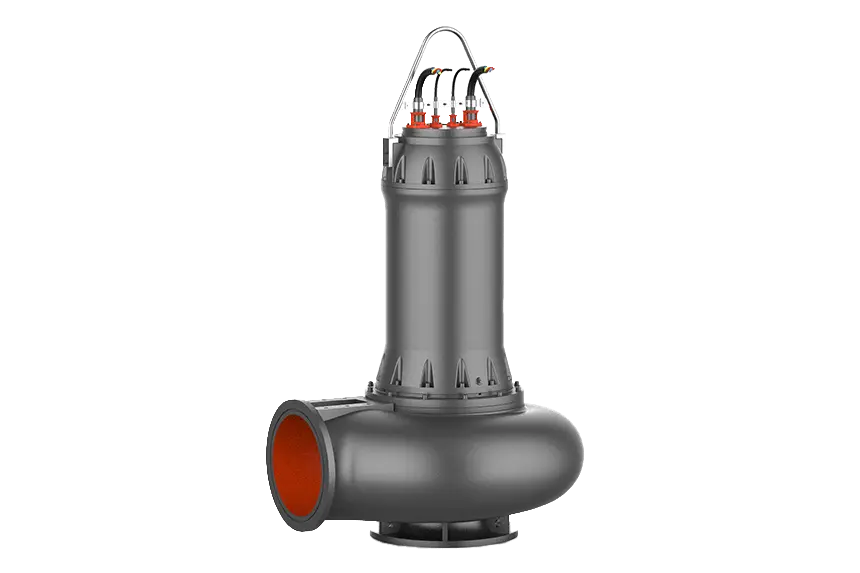
For procurement managers working on refinery, petrochemical, and general process projects in 2026, buying the wrong pump is not just a technical problem—it is a schedule problem. EPC submittals, HSE reviews, and final commissioning acceptance all depend on the pump's design basis, materials traceability, and testing records aligning with the project's stated standard. When they don't, clarification cycles consume weeks and late-stage nonconformances can trigger costly rework after delivery.
The OH2 pump is one of the most commonly specified process pump types across these industries, and projects increasingly require a centerline mounted pump configuration aligned with API 610 12th Edition as required by many project specifications—to reduce inspection risk and support predictable handover. This guide covers what that alignment actually means in practice, which specifications drive acceptance outcomes, and how to structure your procurement to avoid the documentation gaps that derail timelines.
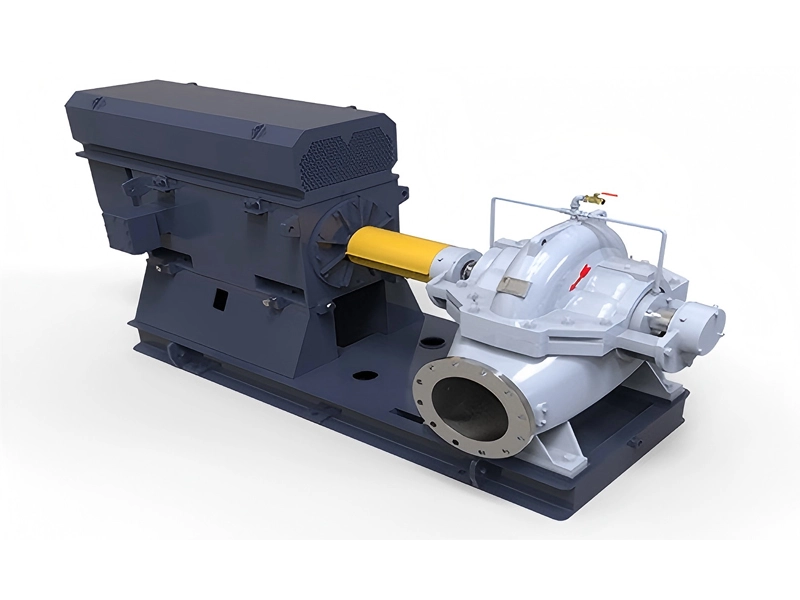
An OH2 pump is a horizontal, overhung, single-stage end-suction centrifugal pump. The hydraulic design is optimized for stable continuous duty across a range of process services—hydrocarbon transfer, utility circulation, chemical process duties—where reliability and maintainability are the primary performance requirements.
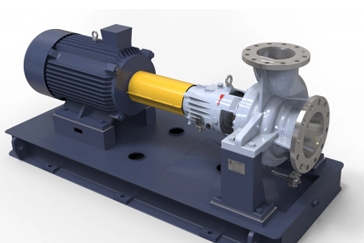
The "overhung" designation means the impeller is cantilevered on the shaft without a bearing on the suction side. This simplifies the hydraulic end design and enables the back-pull-out construction that is a standard expectation for API-class process pumps.
The centerline mounted pump design supports the casing at the horizontal centerline rather than at the feet. When the pump operates at elevated temperature, the casing expands symmetrically upward and downward from the centerline support—keeping the shaft centerline at a consistent elevation relative to the driver.
This matters for two reasons:
Shaft alignment retention: thermal growth that shifts the pump shaft centerline relative to the motor shaft centerline creates misalignment that loads the mechanical seal and bearings; centerline mounting minimizes this shift
Vibration reduction: misalignment is one of the primary sources of elevated vibration in process pumps; reducing thermally induced misalignment reduces vibration at operating temperature
For API 610-aligned procurement, centerline mounting is a design requirement for pumps operating above a defined temperature threshold—confirming this feature in the submittal is a standard inspection point.
Back-pull-out construction allows the rotating element—impeller, shaft, bearings, and mechanical seal—to be withdrawn from the casing as a unit without disturbing the suction or discharge piping connections. The casing remains bolted to the piping; only the back cover and rotating element are removed.
For maintenance planning, this means:
Shorter turnaround time for seal and bearing replacement
No piping disturbance, which eliminates the need to re-support and re-align piping after maintenance
More predictable shutdown duration, which supports maintenance scheduling in continuous process units
API 610-aligned project specifications evaluate not only hydraulic performance but maintainability, safety margins, and the repeatability of assembly and testing documentation. An OH2 pump with centerline mounting and back-pull-out construction addresses the maintainability requirements directly—and the documentation package must demonstrate this alignment to pass the submittal review.
Use this section as your RFQ and submittal backbone. Each item corresponds to a common inspection or clarification point in API 610-aligned project reviews.
| Parameter | What to Define |
|---|---|
| Rated flow and head | The duty point the pump is selected to operate at |
| Allowable operating region (AOR) | The flow range within which the pump can operate continuously without damage |
| Preferred operating region (POR) | The flow range within which the pump operates at best efficiency and lowest vibration |
| Efficiency target | Confirm against project energy efficiency requirements |
Chronic operation outside the POR—or near the AOR limits—is a primary cause of elevated vibration, seal failures, and bearing failures in process pumps. The operating envelope must be defined before selection, not after.
Material selection must be aligned to the fluid's corrosion profile, operating temperature, and contamination risk:
| Component | Material Consideration |
|---|---|
| Casing | Cast iron for non-corrosive services; carbon steel or stainless for corrosive or elevated-temperature duties |
| Impeller | Match to casing material; confirm hardness for erosive services |
| Shaft | Confirm material and surface finish at seal faces |
| Seal chamber | Confirm dimensional compliance with API 610 seal chamber requirements for the specified seal type |
Material certificates (mill certificates or equivalent) must be traceable to the specific components supplied—this is a standard documentation requirement in API 610-aligned projects and a common source of submittal queries when not provided.
Seal chamber configuration: confirm compliance with API 682 seal chamber dimensions if the project specifies API 682 mechanical seals
Flush plan interfaces: confirm the seal flush plan (API Plan 11, 23, 32, or other) is compatible with the site's sealing philosophy and available utilities
Seal vendor coordination: if the mechanical seal is supplied by a third party, confirm the interface dimensions and flush plan connections are coordinated before manufacture
L10 bearing life: confirm the calculated L10 life at the rated duty point meets the project's minimum requirement (API 610 specifies minimum L10 life targets)
Lubrication method: oil ring, forced lubrication, or grease—confirm against the project's maintenance philosophy and available utilities
Monitoring provisions: confirm vibration and temperature monitoring provisions if required by the project's instrumentation specification
The documentation package is where most API 610-aligned submittal reviews find gaps. Confirm the following are included in the supplier's standard package—and request them explicitly in the RFQ if they are not:
| Document | Purpose |
|---|---|
| General arrangement drawing | Dimensional verification; nozzle locations; baseplate footprint |
| Cross-section drawing | Internal construction verification; back-pull-out confirmation |
| Bill of materials with material designations | Material traceability baseline |
| Material certificates | Traceability to specific components as required by the project spec |
| Hydrostatic test record | Casing pressure integrity confirmation |
| Performance test record | Hydraulic performance at rated and off-design points |
| Dimensional inspection record | Confirmation of critical dimensions (seal chamber, bearing housing, shaft runout) |
| Traceability identifiers | Serial number, order number, and heat/lot numbers on certificates |
Note: Confirm the specific API 610 revision required by your project specification before finalizing the documentation requirements. "API 610 12th Edition as required by many project specifications" is the correct framing—align with the revision your project explicitly states.
Confirm the baseplate design supports stable alignment under thermal operating conditions
Confirm the coupling selection and spacer length are appropriate for the back-pull-out maintenance requirement
Confirm the motor frame and mounting dimensions are compatible with the baseplate and available electrical supply
Hydrocarbon transfer, utility circulation, and process service duties in refineries and petrochemical plants are the primary application domain for the OH2 pump. These services require:
Strict reliability KPIs (MTBF targets, seal consumption rate limits)
API 610-aligned documentation for EPC submittal and owner acceptance
Maintainability features (back-pull-out) that support turnaround planning in continuous process units
Procurement risk without correct specification: late-stage nonconformance during inspection or FAT when the pump's design or documentation does not align with the project's API 610 requirements.
Corrosive and temperature-varying duties in chemical plants benefit from the centerline mounted pump design's thermal stability. Services where the fluid temperature varies significantly between startup and operating conditions—or where the pump handles fluids near their boiling point—require the alignment stability that centerline mounting provides.
Procurement risk without correct specification: elevated vibration and seal failures at operating temperature when thermally induced misalignment is not managed by the pump's mounting design.
Standardizing on an OH2 pump platform across multiple process units simplifies spares management (common bearings, seals, wear rings, and gaskets across sizes) and reduces maintenance training requirements. A single pump type with consistent back-pull-out maintenance procedure is easier to maintain reliably than a mixed fleet of different designs.
| Pain Point | How OH2 with API Alignment Addresses It |
|---|---|
| Technical clarifications during bid evaluation | Aligned documentation package reduces query volume |
| Late-stage nonconformance during inspection/FAT | Design and documentation aligned to project spec from the start |
| Commissioning delays from vibration or seal issues | Centerline mounting and correct selection reduce these failure modes |
| Spares complexity across multiple units | Standardized platform reduces part number count |
Before issuing an RFQ for an OH2 pump, confirm these parameters with the engineering team:
Fluid properties: density, viscosity, vapor pressure, solids content, corrosiveness, and any special handling requirements (flammable, toxic, carcinogenic)
Operating cases: normal, minimum, and maximum flow; temperature range including startup and upset conditions; start/stop frequency
Suction conditions: NPSHa at all operating cases including hot startup and minimum tank level; confirm NPSHa margin against the pump's NPSHr at the rated point
Site requirements: area classification (hazardous area zone), allowable noise level, vibration acceptance criteria, instrumentation requirements
Documentation and inspection plan: ITP (Inspection and Test Plan) with witness and hold points; certificates required by the project; API 610 revision specified by the project
Foundation and grouting
Confirm foundation design supports the baseplate without differential settlement
Grouting procedure must achieve full contact under the baseplate without voids
Baseplate flatness verification after grouting before alignment
Piping alignment (strain-free)
Suction and discharge piping must be supported independently of the pump nozzles
Confirm nozzle loads are within the pump manufacturer's allowable limits
Piping alignment to the pump nozzles must be achieved without forcing—forced piping alignment introduces nozzle loads that cause casing distortion and misalignment
Alignment procedure
Cold alignment must account for the thermal growth of the pump and driver at operating temperature
Document the cold alignment target (offset and angularity) based on the calculated thermal growth
Record the final hot alignment check after the pump has reached operating temperature for the commissioning baseline
Commissioning baseline
Record vibration levels (overall and spectrum) at the rated duty point during commissioning
Record bearing temperature at steady-state operating conditions
These baseline records are the reference for future condition monitoring and troubleshooting
The back-pull-out design of an OH2 pump reduces the time and cost of the most frequent maintenance activity—mechanical seal and bearing replacement:
Rotating element removal without piping disturbance: eliminates the need to break and re-support piping connections
Predictable maintenance duration: back-pull-out procedure is consistent across sizes; maintenance time can be planned reliably
Reduced piping re-alignment requirement: because piping is not disturbed, the post-maintenance alignment check is simpler and faster
| TCO Factor | Impact of Correct OH2 Specification |
|---|---|
| Seal failure frequency | Reduced by centerline mounting (thermal alignment stability) and correct operating point selection |
| Bearing failure frequency | Reduced by correct L10 life specification and lubrication method selection |
| Maintenance outage duration | Reduced by back-pull-out construction |
| Spares inventory cost | Reduced by platform standardization across multiple pump sizes |
| Energy cost | Confirmed by efficiency target in the selection specification |
| Commissioning cost | Reduced by aligned documentation package (fewer submittal queries, fewer re-submittals) |
MTBF (Mean Time Between Failures): track against the project's reliability target; benchmark against industry data for the service type
Seal consumption rate: seals per pump per year; a leading indicator of operating point and alignment quality
Unplanned downtime hours: track against the baseline established at commissioning
Energy cost per operating hour: confirm against the efficiency target specified at procurement
API-driven procurement is ultimately about reducing project risk: fewer inspection surprises, fewer commissioning delays, and more predictable lifecycle performance. If your project specifies API 610 requirements, selecting an OH2 pump with centerline mounted pump construction—and aligning the documentation package to your inspection plan from the RFQ stage—can be the difference between a smooth acceptance and a schedule-impacting re-submittal loop.
The specification work that makes this reliable happens before the purchase order is issued: confirmed operating envelope, material selection aligned to the fluid's corrosion profile, seal system coordinated with the site's sealing philosophy, and a documentation requirement list that matches the project's ITP.
View OH2 centerline mounted pump options and request a quote
To receive an accurate recommendation, submit:
Work conditions: fluid, temperature range, pressure, viscosity and solids content, indoor/outdoor, hazardous area classification
Quantity: units per service, spares philosophy, project timeline
Size and spec: flow, head, NPSHa, nozzle sizes, materials of construction, seal plan preference, motor specifications (voltage, Hz, frame)
Target metrics: MTBF goal, vibration acceptance limit, efficiency target, documentation and ITP requirements
Current problems: acceptance or documentation gaps, cavitation, seal failures, elevated vibration, misalignment, delivery schedule risk
Q1: What is an OH2 pump?
An OH2 pump is a horizontal, overhung, single-stage end-suction centrifugal process pump. It is commonly specified for refinery, petrochemical, and general industrial process services. The OH2 designation (from API 610's pump type classification) indicates an overhung impeller design with centerline-mounted casing support and back-pull-out construction—features that support thermal alignment stability and efficient maintenance access. It is one of the most widely specified pump types in API 610-aligned process plant projects.
Q2: How does an OH2 pump compare with OH1, BB1, or between-bearings designs?
An OH1 design is typically a lighter-duty overhung pump without the centerline mounting and API-class construction features of the OH2 pump—suitable for general utility services but not for API 610-aligned process plant applications. BB1 (axially split, between-bearings) designs are favored for very high flow rates in utility and water service applications. Between-bearings pump types (BB2, BB3, BB5) are selected for higher energy, heavier duty, or specific rotor dynamics requirements where the overhung design's shaft deflection characteristics are a limitation. The centerline mounted pump OH2 is the standard choice when API-class robustness, thermal stability, and back-pull-out maintainability are required in a single-stage end-suction configuration.
Q3: What ROI comes from specifying an API-aligned OH2 pump?
ROI from correctly specified OH2 pumps is driven by three factors: fewer unplanned failures (reduced seal and bearing failure frequency from thermal alignment stability and correct operating point selection), smoother acceptance and commissioning (aligned documentation package reduces submittal query cycles and re-submittal delays), and shorter maintenance outages (back-pull-out construction reduces turnaround time for seal and bearing replacement). On critical process services, a single avoided unplanned shutdown typically pays for the incremental cost difference between an API-aligned pump and a non-API alternative many times over.
Q4: Do we need to modify existing piping or foundations to replace with an OH2 pump?
It depends on the existing installation. If the replacement OH2 pump has the same nozzle sizes, nozzle elevations, and baseplate footprint as the existing pump, it can be a near drop-in replacement. However, differences in nozzle elevation (due to centerline mounting height), baseplate footprint, coupling spacer length, or shaft centerline height may require piping modifications, foundation adjustments, or new baseplate grouting. A dimensional comparison between the existing pump and the proposed replacement should be completed before finalizing the purchase order.
Q5: What parameters should we provide for accurate selection and quoting?
To receive an accurate recommendation and quotation for an OH2 pump, provide: rated duty point (flow and head), operating range (minimum and maximum flow), NPSHa at all operating cases, fluid properties (density, viscosity, vapor pressure, solids, corrosiveness), operating temperature range, suction and discharge nozzle size preferences, materials of construction requirements, seal plan preference and available flush utilities, motor specifications (voltage, frequency, frame size preference), site constraints (area classification, noise limit, vibration acceptance criteria), API 610 revision required by the project specification, inspection and testing documentation requirements (ITP, witness points, certificates), quantity and delivery timeline, and any current failure symptoms (cavitation, seal failures, elevated vibration, misalignment) that the replacement must address.