English
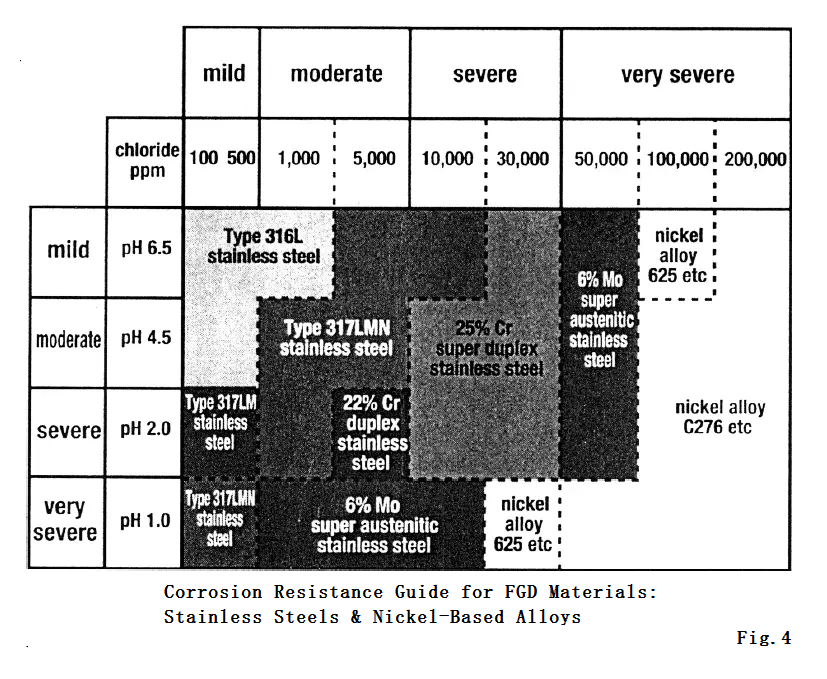
T304 Stainless Steel: Suitable for chloride concentrations 0–200 mg/L.
T316 Stainless Steel: Tolerates chloride levels <1000 mg/L.
T317 Stainless Steel: Resists chloride concentrations <5000 mg/L.
Note: Chloride content in hydrostatic test water must not exceed 25 mg/L for stainless steel/nickel alloy pipelines.
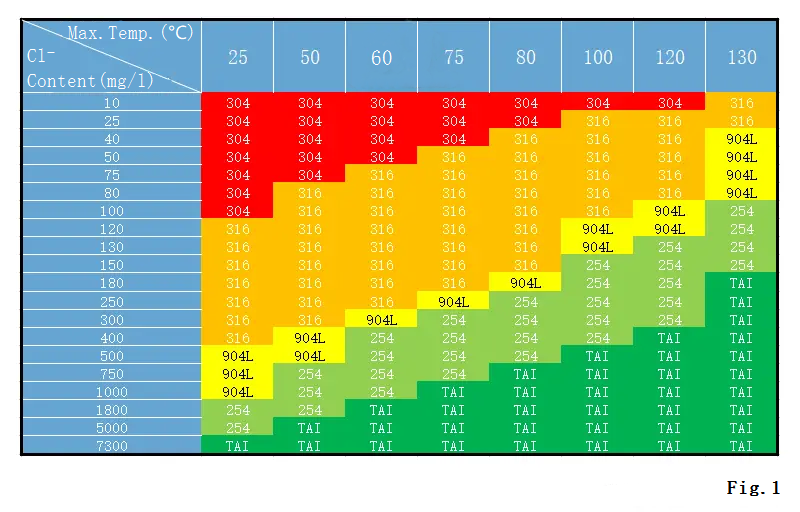
Refer to Figure 1:
Low chloride & low temp: 304 (red zone in charts).
High chloride & high temp: Pure titanium (green zone).
A simplified hierarchy for chloride resistance (low to high):
304 < 316L < 904L < 254SMO < Pure Titanium (TAI)
The Pitting Resistance Equivalent (PRE) number reflects a material's resistance to chloride-induced pitting corrosion.
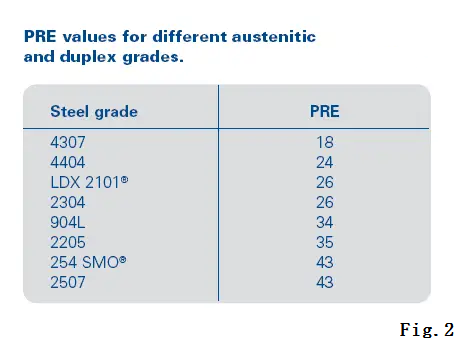
Refer to Fig.2:
2101/2304/2205/2507 duplex steels outperform 316L, with some matching super austenitics:
2507 ≈ 254SMO
2205 ≈ 904L
Refer to Fig.3:
316L stainless steel demonstrates significantly inferior chloride pitting corrosion resistance compared to 254SMO. At 60°C, 316L withstands less than 200 ppm chlorides, while 904L resists 8,500 ppm and 254SMO endures up to 15,000 ppm chloride concentration.
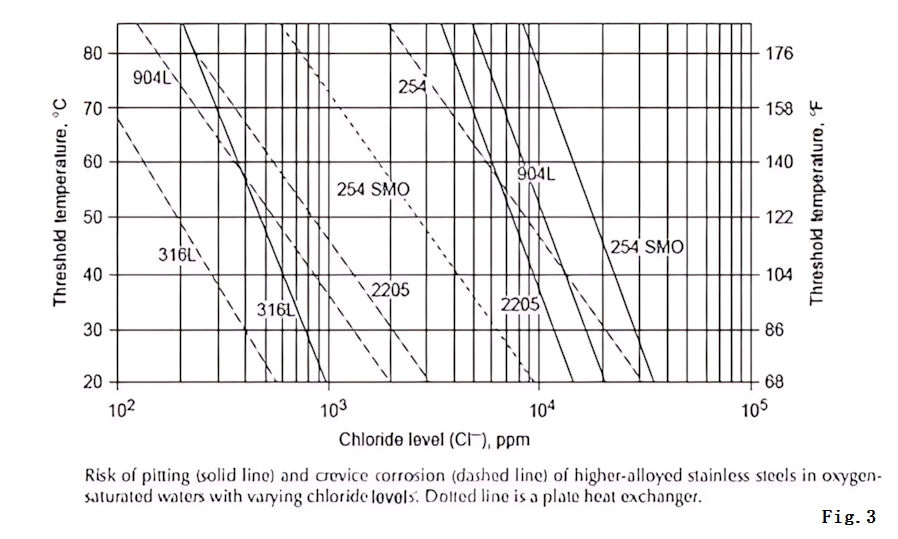
At 50-70°C, simply match materials to pH and chloride concentration requirements.