English
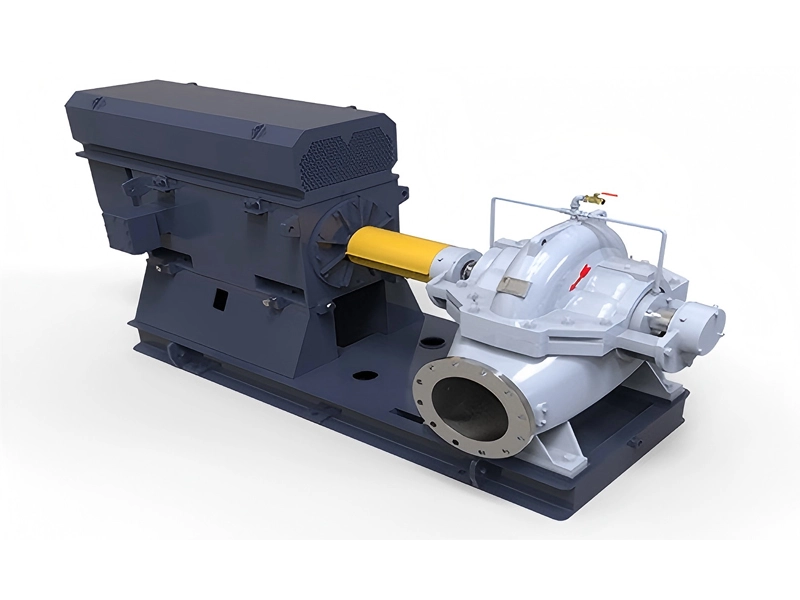
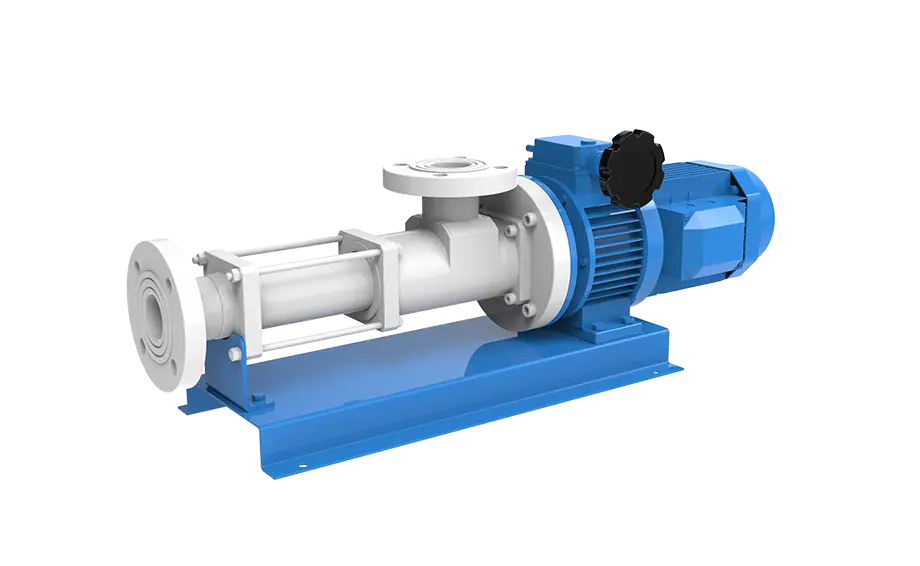
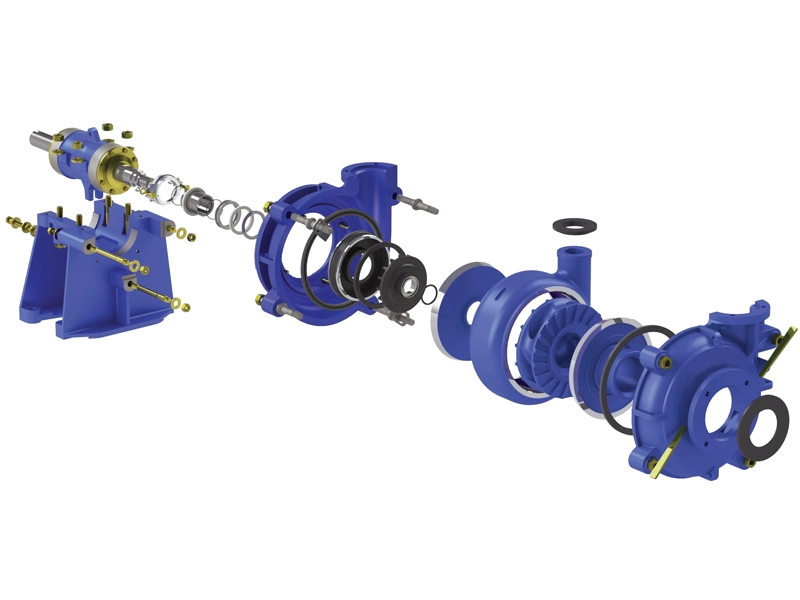
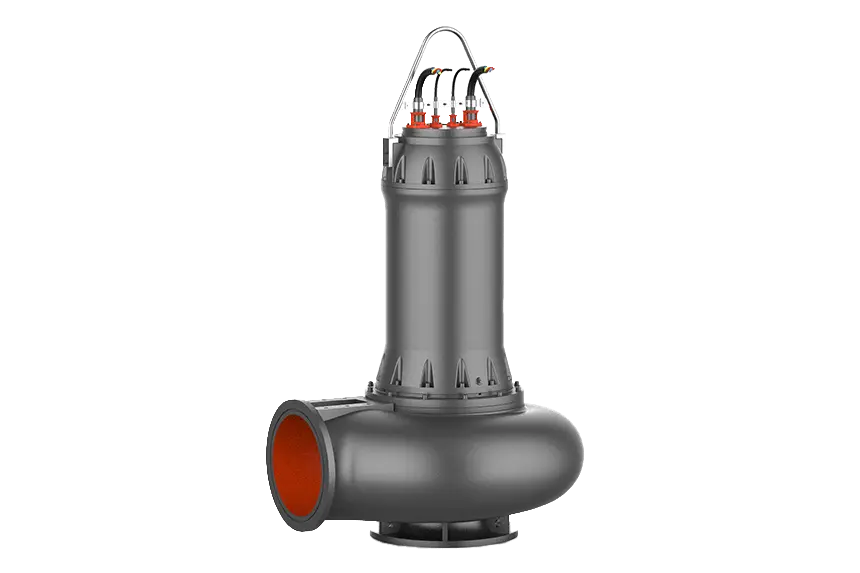
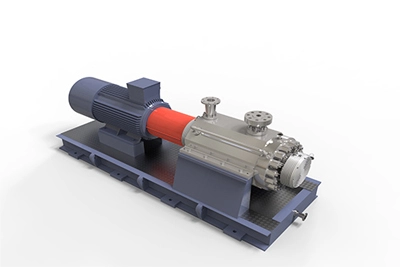
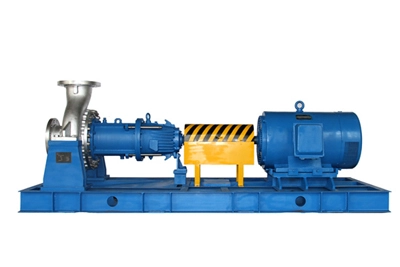
An API 610 BB3 pump is a horizontal, axially split, multistage centrifugal pump with the rotor supported between bearings. It is commonly considered for services that combine relatively high head, continuous duty, hydraulic stability and the need for practical access to internal components. Typical projects include crude-oil or refined-product pipelines, boiler-feed duties, high-pressure water injection, mine dewatering, desalination and selected refinery or chemical processes.
The pump designation alone does not determine whether a BB3 is the correct choice. A successful selection depends on the complete system: normal and rated flow, differential head, suction conditions, fluid properties, operating cases, allowable materials, driver philosophy, control method, inspection requirements and the consequences of downtime. A BB3 selected from only one flow-and-head point may meet the duty on paper yet operate far from its best efficiency region, suffer recirculation, consume unnecessary power or require frequent maintenance.
This guide explains how engineers, EPC contractors and industrial buyers can evaluate BB3 suitability before requesting a quotation. It also shows where LUBOR can support the process with published model ranges, engineering review and configuration recommendations. Numerical ranges in this article should be treated as manufacturer-published portfolio information rather than universal API limits. Final selection must be based on a completed datasheet, certified performance curves and project specifications.
An API 610 BB3 pump is an axially split, multistage, between-bearings centrifugal pump intended for demanding process services where high head and stable rotor support are important.
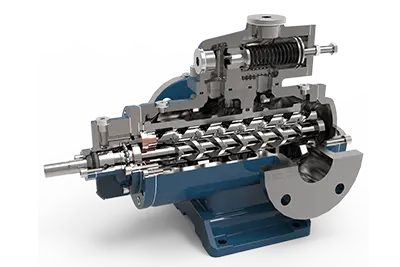
The term “between bearings” means the impellers are located between radial bearing supports rather than overhung from one side of the bearing housing. This arrangement helps control shaft deflection and rotor dynamics as the number of stages and developed head increase. The axial split casing opens along a horizontal joint, allowing maintenance teams to access the rotor assembly without disconnecting major suction and discharge piping in many installations.
A BB3 normally uses several impellers arranged to add head stage by stage. Opposed impeller arrangements may be used to reduce hydraulic axial thrust. The exact stage count, first-stage design, balance method, bearing arrangement, seal system and nozzle orientation depend on the manufacturer and project specification. Buyers should therefore avoid assuming that every BB3 from different suppliers is mechanically identical.
LUBOR publishes a performance envelope for its BB3 product line of up to 3,200 m³/h capacity, up to 2,900 m head, temperatures up to 205°C and pressure up to 300 bar. These values describe the outer portfolio range, not a promise that one pump size can combine all maximum values simultaneously. A realistic selection will occupy a smaller operating window defined by speed, stage count, impeller diameter, material, NPSH, driver power and mechanical limits.
A BB3 pump fits best when the system requires multistage pressure generation, between-bearings rotor support and maintainable axial access without the full double-casing architecture of a BB5.
Common services include long-distance liquid pipelines, boiler feedwater, process charge, water injection, reverse-osmosis feed, mine or pit dewatering and high-pressure clean-liquid transfer. The fluid is usually clean or only slightly contaminated because close internal clearances and multistage hydraulics are not intended for heavy solids. The service may be hot, corrosive or high pressure, but the selected material and seal system must be validated against the actual fluid composition and temperature.
For pipeline duty, the operating point may change as throughput, route pressure or product properties change. For boiler-feed service, temperature, minimum-flow protection, startup conditions and condensate quality matter. For water injection, corrosion, dissolved gases, salinity, suction pressure and long continuous operating hours are important. These differences mean that two projects with the same rated flow and head may require different first-stage hydraulics, materials, seals, drivers and control strategies.
Buyers reviewing the LUBOR bb3 pump should begin with the published configuration and range, then confirm the complete duty with an engineer. The product page is the commercial destination; this article is intended to explain the selection logic that supports it.
Sizing an API 610 BB3 pump means matching the pump curve to every credible operating case while maintaining acceptable efficiency, suction margin, power, vibration and mechanical reliability.
The first step is to separate normal, rated, minimum and maximum conditions. A single “design point” is rarely enough. Normal flow represents the most common operating condition. Rated flow may include a capacity margin required by the project. Minimum continuous flow protects the pump from damaging low-flow operation. Maximum flow may occur during startup, bypass operation, parallel operation or future expansion.
Total differential head should be calculated from the system, not guessed from the discharge pressure alone. The calculation normally includes static elevation, vessel pressure difference, friction losses, equipment losses and velocity-head effects. For varying system resistance, the supplier needs either several flow-head points or a system curve. This helps determine whether the pump can operate stably across the expected range.
The U.S. Department of Energy has advised that, to minimize energy use, the system curve should intersect the selected pump curve within about 20% of the best efficiency point when practical. That recommendation is not a substitute for API or project requirements, but it is a useful screening rule. A pump selected too far to the left or right of its preferred operating region can experience higher recirculation, vibration, radial load, temperature rise and energy cost.
Provide normal, rated, minimum and maximum flow in consistent units. State whether the pump operates alone, in parallel or in series. If multiple pumps share a header, include the expected combination of operating units. Parallel pumps do not automatically divide flow equally; differences in curves, system resistance and control logic can shift the operating points.
Provide suction pressure, discharge pressure, elevations and line losses for each case. Specify whether pressures are gauge or absolute and identify the reference elevation. For hot liquids, pressure errors can also lead to incorrect NPSH calculations. The supplier should be able to trace each stated head value back to a system condition.
Density affects developed pressure and driver power. Viscosity changes hydraulic performance and may require corrections. Vapor pressure affects NPSHA. Corrosive components influence material selection, while solids can increase wear or block internal passages. A complete fluid description is more useful than a general label such as “process water” or “hydrocarbon.”
Temperature influences vapor pressure, viscosity, casing growth, seal selection, bearing environment and material compatibility. Provide normal, minimum, maximum and startup temperatures. A BB3 used for cold pipeline service and a BB3 used for hot boiler feed may share the same API type but require very different mechanical details.
NPSH evaluation determines whether sufficient suction energy is available to prevent damaging vapor formation and unstable inlet flow at all operating cases.
NPSHA is calculated from the system. NPSHR is obtained from the pump’s tested performance. The difference is the available margin, but the acceptable margin should not be reduced to one universal number. It depends on service criticality, pump size, speed, fluid behavior, suction specific speed, operating range, uncertainty and project rules.
For a BB3, the first-stage impeller has a strong influence on suction performance. A double-suction first stage can reduce inlet velocity and improve suction capability in suitable designs. An inducer or larger first-stage eye may be considered in some applications, but every change involves tradeoffs in efficiency, stability, mechanical complexity or operating range.
Do not use a supplier’s NPSHR value without confirming the test basis and the exact impeller, speed, flow and stage configuration. NPSHR rises with flow and can change when the selected impeller diameter or speed changes. The procurement document should ask for NPSHR across the expected operating range, not only at rated flow.
Suction piping matters as much as the pump. Poor reducer orientation, short straight runs, uneven velocity distribution, air pockets, inadequate submergence or excessive entrance losses can cause field problems even when the datasheet calculation appears acceptable. The pump vendor should review the stated NPSHA, but the EPC or plant designer remains responsible for the system calculation and piping arrangement.
Material selection for an API 610 BB3 pump is the process of matching pressure-containing, rotating and wear components to the fluid chemistry, temperature, corrosion mechanism and expected service life.
Carbon steel may be appropriate for clean hydrocarbons or treated water under controlled conditions. Stainless steels can improve corrosion resistance, but chloride concentration, temperature, pH, oxygen and crevice conditions can make a simple “316 stainless” rule unsafe. Duplex, super duplex, nickel alloys or other materials may be required for seawater, sour service, aggressive chemicals or high-chloride water.
The review should cover the casing, impellers, shaft, sleeves, wear rings, fasteners, balance components, seal chamber and small-bore connections. Mixed materials can create galvanic or differential-expansion issues. Hardfacing and clearances may be important where seizure or galling is possible. The supplier should confirm both the material grade and the applicable inspection or certification requirements.
Provide the full composition when possible, including chloride, sulfur compounds, dissolved gases, solids and cleaning chemicals. State whether the fluid can change during startup, shutdown, flushing or upset conditions. A pump selected for the normal process may fail if an occasional cleaning solution or off-spec fluid is more corrosive than the main service.
Comparing BB3 with BB2, BB4 and BB5 means evaluating casing construction, stage arrangement, pressure capability, maintenance access and the hydraulic duty rather than choosing by keyword alone.
| Pump Type | General Construction | Typical Strength | Typical Limitation | Common Selection Direction |
|---|---|---|---|---|
| BB2 | One- or two-stage, radially split, between bearings | Robust high-temperature process service with centerline support options | Not intended for very high multistage head | Refinery and petrochemical process duty with moderate head |
| BB3 | Multistage, axially split, between bearings | High head with practical rotor access and stable support | Axial joint and internal complexity require precise manufacture and assembly | Pipeline, boiler feed, water injection and high-pressure clean-liquid service |
| BB4 | Multistage, radially split, single casing | Compact multistage arrangement for selected high-head services | Rotor access can require more disassembly than an axially split BB3 | High-head process or utility service when radial split is preferred |
| BB5 | Multistage inner bundle inside an outer barrel casing | Double-casing architecture for very high pressure and severe service | Higher capital cost, weight and maintenance complexity | Extreme pressure, high temperature, boiler feed, charge and injection service |
A BB2 should not be rejected simply because a project includes “high pressure.” If the required head can be achieved with one or two stages and the process conditions favor a radially split casing, a BB2 may be more economical and simpler. A BB5 becomes more attractive as pressure, temperature, casing-joint loading and service criticality increase. A BB4 can fit duties where a radially split multistage casing is preferred.
The LUBOR published BB5 portfolio reaches up to 1,200 m³/h, 2,900 m head, 455°C and 350 bar, while the published BB3 portfolio reaches up to 3,200 m³/h, 2,900 m head, 205°C and 300 bar. These values illustrate portfolio differences but should not be used as a direct model-selection chart. The correct boundary depends on the exact pressure-temperature combination, casing design, stage count, nozzle loads, material and project standard.
When a project specification calls for an api 610 pump, the datasheet should identify the preferred type or allow the manufacturer to propose alternatives with technical justification. A well-structured bid comparison records why each supplier selected BB2, BB3, BB4 or BB5 rather than evaluating only price.
The driver and control strategy determine how the BB3 pump reaches required flow and head while avoiding overload, unstable operation and excessive energy use.
Driver sizing should consider density, efficiency, rated flow, maximum flow, impeller diameter, speed, service factor, startup method, ambient conditions and future operating cases. The motor must not be selected from a rough hydraulic calculation alone. The supplier should provide absorbed power across the full curve and identify any non-overloading requirement in the project specification.
Speed influences both hydraulic performance and mechanical behavior. Increasing speed raises flow, head and power according to affinity relationships for geometrically similar conditions, but real multistage pump limits also involve NPSH, rotor dynamics, bearing loads, seals and critical speeds. A speed change must therefore be reviewed as an engineered configuration, not a simple field adjustment.
Flow control can use throttling, bypass, variable-speed drive, staged operation or a combination. Throttling is simple but can waste pressure energy. A VFD can reduce energy use when the system has variable flow and substantial friction head, but it may be less beneficial when the system is dominated by static head. Minimum-flow protection remains necessary even with variable speed.
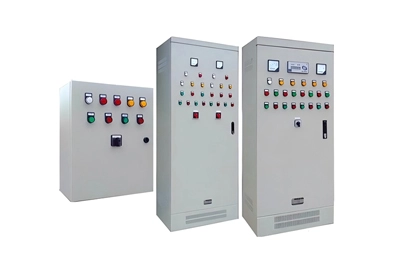
A properly configured pump control panel can integrate motor protection, permissives, vibration or temperature inputs, minimum-flow logic, pressure control and remote communication. The control philosophy should be defined during pump selection because instrument locations, trip setpoints and startup sequences affect the package design.
Mechanical seals, bearings and auxiliaries are the supporting systems that keep a BB3 pump contained, aligned, lubricated and monitored throughout continuous duty.
The seal selection must consider fluid hazard, vapor pressure, solids, temperature, pressure, emissions expectations, available utilities and maintenance philosophy. A single seal may be acceptable in some services, while dual seals or engineered seal-support plans may be required for hazardous, flashing, toxic or poor-lubricity fluids. The seal chamber and piping plan should be evaluated as part of the pump package, not after the pump has been selected.
Bearings must support radial and residual axial loads over the expected operating range. Lubrication may be grease, oil ring, forced oil or another project-approved system. The supplier should provide bearing arrangement, calculated life basis where required, oil level or circulation details, temperature monitoring and recommended alarm or trip points.
Auxiliary systems may include seal flushing, cooling, lubrication, minimum-flow recycle, warm-up lines, venting, draining, instrumentation and condition monitoring. Each connection should appear on the general arrangement and piping drawings. Buyers should confirm whether auxiliaries are included in the quoted scope, supplied loose, mounted on a baseplate or provided by others.
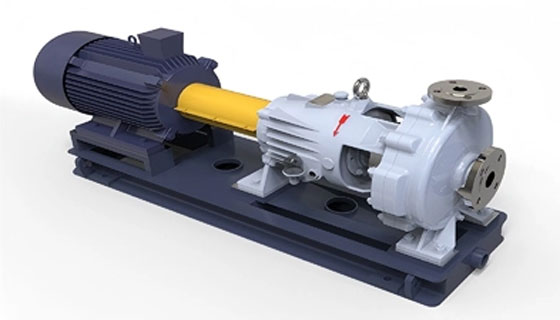
Testing and inspection verify that the manufactured BB3 pump meets the agreed hydraulic, mechanical, material and documentation requirements before shipment.
The inspection plan should identify witness, hold and review points. Typical requirements may include material certificates, positive material identification, dimensional checks, casing pressure tests, rotor balance, mechanical run tests, performance tests, vibration measurements, seal-system checks, coating inspection and documentation review. The exact list depends on the project specification and risk level.
A performance test should confirm flow, head, efficiency and power at agreed points. The buyer should state the acceptance standard, tolerances, test liquid, speed and instrumentation class. When the actual process fluid differs significantly from water, the bid should explain how performance will be corrected or predicted.
Mechanical testing should record vibration, bearing temperatures, leakage observations and stable operation. For a multistage pump, the test arrangement and duration should be adequate to identify abnormal rotor behavior. If a complete-string test with the job motor, coupling, lubrication system or control panel is required, that scope must be included in the inquiry.
Documentation is part of the deliverable. The final dossier may include certified curves, datasheets, drawings, material records, inspection reports, test certificates, manuals, spare-parts lists and preservation instructions. Ask for the document schedule before order placement so that review dates do not delay manufacturing.
Lifecycle cost is the total cost of owning and operating the BB3 pump, including energy, maintenance, downtime, spares, utilities and eventual replacement rather than only purchase price.
Pumping systems account for a significant share of industrial motor electricity. The U.S. Department of Energy has reported that pumping systems represent about 25% of the energy consumed by electric motors in the U.S. industrial sector and more than 50% of electricity use in pump-intensive industries. This does not mean every BB3 project can save the same percentage, but it explains why efficiency and control deserve serious attention.
For continuous duty, a small efficiency difference can outweigh a modest purchase-price difference. The comparison should use the expected operating profile, not only rated-point efficiency. Include annual operating hours, electricity cost, load cases and control method. Also consider the energy consumed by auxiliary systems such as seal support or forced lubrication.
Reliability costs include planned maintenance intervals, seal and bearing replacement, alignment work, outage labor, lost production and spare inventory. A pump with easier rotor access may reduce maintenance time, but only if the site has adequate lifting, workspace and trained personnel. A technically excellent pump can still be expensive to maintain if the installation layout blocks the casing split or coupling removal.
A BB3 pump RFQ is a structured technical package that gives suppliers enough information to select, price, test and document a comparable pump configuration.
Identify the service: project, tag number, process unit, duty, continuous or intermittent operation, criticality and standby philosophy.
List operating cases: minimum, normal, rated and maximum flow; differential head; suction and discharge pressure; temperature; density; viscosity and vapor pressure.
Describe the fluid: chemical composition, concentration, solids, gases, corrosive species, toxicity, flammability and expected variations.
State site conditions: indoor or outdoor location, ambient temperature, altitude, hazardous-area classification, power supply and cooling utilities.
Define mechanical requirements: API type, casing and nozzle preferences, materials, seals, bearings, lubrication, baseplate, coupling and driver.
Define controls: fixed or variable speed, startup method, minimum-flow protection, instrumentation, alarms, trips and communication protocol.
Define testing: performance points, mechanical run, vibration, NPSH, material inspection, witness points and documentation.
Define commercial scope: spares, commissioning support, preservation, packing, delivery terms, warranty and after-sales expectations.
Request a deviation list with every quotation. Suppliers should clearly state where their proposal differs from the datasheet or specification. Without a deviation list, buyers may discover after order placement that an assumed feature, test or document was not included.
Working with LUBOR on BB3 selection means combining a published high-pressure multistage portfolio with project-specific engineering review, manufacturing, testing and documentation.
LUBOR states that its manufacturing history dates to 1958 and that API 610 production began in 1995. The company publishes a broad API 610 portfolio covering OH, BB and VS configurations, which helps engineers compare adjacent pump types rather than forcing every high-head duty into one design.
For a useful technical review, provide the operating cases and fluid data before asking for a final model or price. LUBOR can then evaluate whether BB3 is appropriate, whether another API configuration offers lower risk, and which questions must be resolved before a certified curve can be issued.
A good quotation should explain the proposed stage count, speed, first-stage configuration, materials, seal system, driver power, control approach, test scope and deviations. This level of detail supports a defensible procurement decision and reduces the chance of late redesign.
The following FAQs answer common technical and procurement questions about API 610 BB3 pump selection.
A BB3 is generally an axially split multistage pump with a single pressure casing, while a BB5 uses an inner multistage cartridge or bundle inside an outer barrel casing. BB5 is often considered for more severe pressure-temperature combinations, while BB3 can offer easier axial access and high-flow capability. The final choice depends on the datasheet and project specification.
Yes, BB3 pumps are widely considered for boiler-feed duties when the required flow, head, temperature, suction conditions and reliability expectations fit the design. High-pressure or very high-temperature services may favor BB5. Minimum-flow protection, NPSH, water chemistry, seal system and startup conditions must be reviewed.
The required stage count depends on total head, speed, impeller design, allowable diameter, efficiency, NPSH and mechanical limits. More stages are not automatically better. The manufacturer selects the stage arrangement from the complete operating cases and should provide a certified curve and sectional drawing.
No. A double-suction first stage can improve suction performance in suitable designs, but it is not universally required. The correct first-stage arrangement depends on NPSHA, flow, speed, fluid properties, suction specific speed, project margin and available hydraulic designs.
Major cost drivers include hydraulic size, stage count, pressure rating, material, seal system, driver power, baseplate, auxiliaries, hazardous-area requirements, inspection, testing, documentation and spare parts. Comparing price without aligning these items can produce a misleading result.
Review the completed datasheet, certified curves, operating range, NPSH margin, power curve, materials, seal plan, bearing and lubrication arrangement, nozzle loads, drawings, controls, test plan, deviation list, spares and maintenance access. Approval should confirm both performance and package integration.
An API 610 BB3 pump is a strong option for high-head, continuous-duty services where multistage hydraulics, between-bearings support and axial maintenance access are valuable. It should not be selected from the name alone. The best result comes from matching every operating case to an appropriate curve, confirming NPSH and material suitability, comparing BB3 with adjacent BB types, and integrating the driver, seals, auxiliaries and control strategy.
LUBOR publishes a broad BB3 performance range and can review pipeline, boiler-feed, water-injection and process duties from a completed datasheet. A detailed RFQ allows the supplier to propose a transparent configuration, explain deviations and provide the testing and documentation needed for a reliable procurement decision.
American Petroleum Institute, API 610 12th Edition reference: https://www.api.org/products-and-services/standards/important-standards-announcements/rp697
ISO 13709:2009, Centrifugal pumps for petroleum, petrochemical and natural gas industries: https://www.iso.org/standard/41612.html
U.S. Department of Energy, Select an Energy-Efficient Centrifugal Pump: https://www.energy.gov/sites/prod/files/2014/05/f16/efficient_centrifug_pumps.pdf