English
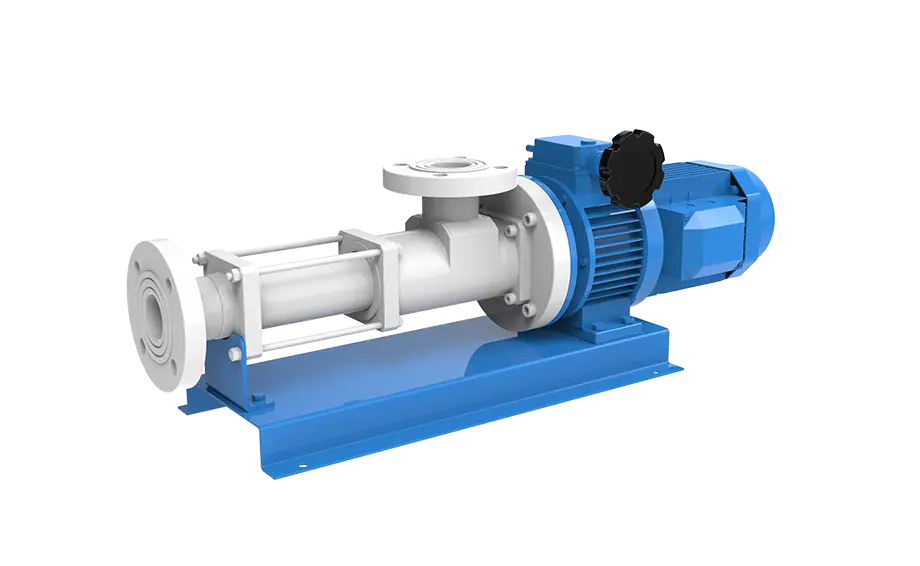
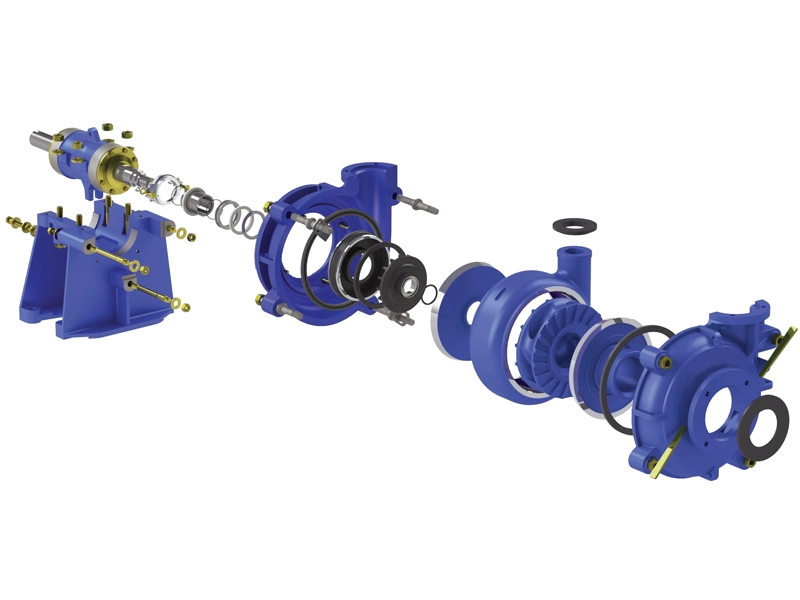
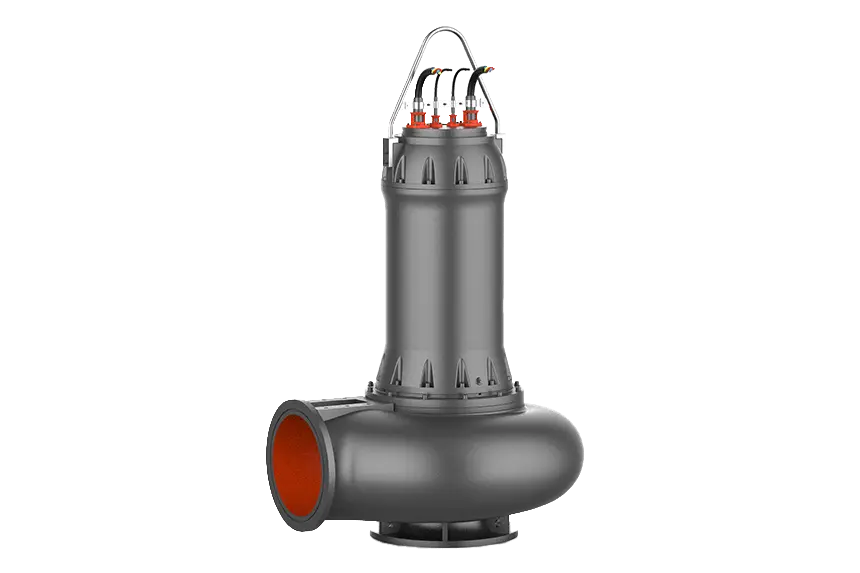
Choosing among an OH1, OH2 and OH3 pump is not simply a matter of selecting the model with the highest published capacity. These three API 610 overhung configurations solve different mechanical-layout, temperature, maintenance and installation problems. A horizontal foot-mounted pump may be economical for moderate duties, a centerline-mounted unit may be better suited to hot process service, and a vertical inline pump may save valuable floor space when the hydraulic envelope and piping arrangement support that choice.
This guide is organized around project decisions rather than product labels. It begins with the plant layout, moves through operating conditions and maintenance access, and then converts those findings into a practical specification. The objective is to help EPC engineers, plant owners and procurement teams identify the configuration that fits the complete system instead of forcing a familiar pump type into an unsuitable installation.
LUBOR publishes OH1, OH2 and OH3 product ranges within its API 610 portfolio. The figures referenced below are manufacturer-published envelope values for initial screening only. Final selection must be based on an approved datasheet, certified performance curve, material review and project-specific operating cases.
OH1, OH2 and OH3 are API 610 overhung centrifugal-pump arrangements distinguished primarily by support geometry, casing mounting and shaft orientation.
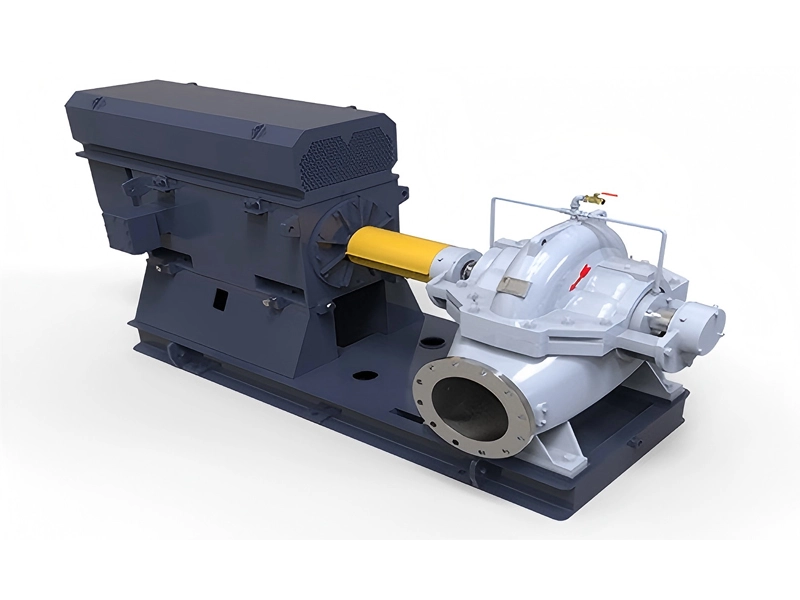
An overhung pump places the impeller on one side of its bearing support. That common principle links the three configurations, but their installation behavior is very different. An OH1 is a horizontal, foot-mounted, end-suction pump with a separate bearing housing. An OH2 is also horizontal and end-suction, but its casing is supported near the shaft centerline to reduce the effect of thermal growth. An OH3 is a vertical inline pump with a separate bearing bracket and an inline suction-discharge piping arrangement.
The practical consequence is that each configuration manages space, heat and external loads differently. The OH1 usually offers a straightforward and cost-conscious arrangement for duties within its pressure and temperature limits. The OH2 is often selected for refinery and high-temperature services where casing expansion must remain better aligned with the shaft and driver. The OH3 pump uses a vertical footprint and inline nozzles, which can be useful on compact skids, pipe racks or congested plant areas, but it requires careful evaluation of piping support, motor access and vertical maintenance clearance.
| Configuration | Basic Arrangement | Primary Strength | Typical Limitation to Review |
|---|---|---|---|
| OH1 | Horizontal, foot-mounted, end suction | Simple installation and economical support arrangement | Thermal growth and casing distortion at higher temperatures |
| OH2 | Horizontal, centerline-mounted, end suction | Better accommodation of hot-service casing expansion | Usually higher initial cost and more substantial baseplate requirements |
| OH3 | Vertical inline with separate bearing bracket | Compact floor footprint and inline piping | Vertical access, nozzle loading and maintenance ergonomics |
The first selection question should therefore be: “What installation problem must the pump arrangement solve?” Starting with that question prevents a common procurement error—comparing pumps only by flow and head while ignoring how the casing, bearings, nozzles and driver interact with the plant.
Layout-led pump selection evaluates footprint, nozzle orientation, access, lifting space and piping support before detailed hydraulic optimization.
Many projects begin with a process datasheet and immediately request a hydraulic quotation. That sequence is incomplete. Two pumps can meet the same rated flow and head while creating very different installation costs. A horizontal pump requires baseplate length, coupling access and lateral removal space. A vertical inline pump can reduce floor area, yet it may need overhead clearance to remove the motor or rotating assembly.
For a greenfield plant, the layout team should compare the total installed envelope rather than the bare-pump dimensions. Include the driver, coupling guard, seal support system, instrumentation, drains, minimum straight-pipe requirements, isolation valves and the space needed to withdraw components. For a retrofit, verify the existing nozzle centerlines, foundation capacity, pipe flexibility, lifting route and electrical connection before selecting a replacement arrangement.
An OH3 pump can be valuable when horizontal space is severely constrained. Inline suction and discharge nozzles may simplify piping in a compact module, particularly when the process line already runs vertically or when a skid has limited width. However, the apparent space saving should not be counted twice. The design still needs access for bearings, seal components, coupling and motor removal. A pump that fits during installation but cannot be serviced without dismantling adjacent pipework is not a successful compact design.
An OH1 or OH2 generally gives technicians more familiar horizontal access. The shaft line is visible, alignment checks are direct, and a suitable baseplate can integrate the pump, driver and auxiliary components. The cost is a larger floor footprint and, depending on nozzle orientation, more piping offsets. The correct comparison is therefore between total lifecycle access and total installed space—not simply between vertical and horizontal dimensions on a catalog drawing.
An API 610 OH1 pump is a horizontal, foot-mounted, single-stage overhung process pump generally used where moderate temperature and pressure permit a simpler support arrangement.
The OH1 configuration is often attractive when the service is stable, the process temperature is not extreme and the project values straightforward installation. The casing feet support the pump from below, and the separate bearing housing provides a conventional mechanical arrangement. This can make the OH1 a practical choice for water transfer, utility service, selected chemical duties, light hydrocarbons and other applications that fall within the approved material and pressure envelope.
LUBOR publishes an OH1 screening envelope of up to 2,000 cubic meters per hour, up to 250 meters of head and temperatures up to 260 degrees Celsius. These maximum values should never be interpreted as one guaranteed operating point. Flow, head, speed, impeller diameter, power, NPSH, material strength and nozzle rating interact. A duty near one maximum may require derating in another dimension.
The strongest reason to choose an OH1 is not that it is “basic,” but that it may be sufficient. Over-specification can add capital cost, foundation weight and spare-parts complexity without reducing real risk. If the casing temperature is moderate, piping loads are controlled, the required reliability class is met and the maintenance environment favors a horizontal arrangement, the api 610 oh1 configuration may provide the appropriate balance.
Engineers should pay particular attention to casing-foot movement during heat-up, baseplate flatness, pipe strain and coupling alignment. A foot-mounted casing can transmit thermal growth differently from a centerline-supported casing. For cycling services, hot alignment and transient conditions may become more important than the normal operating point. The OH1 should be selected because the complete mechanical analysis supports it, not merely because its acquisition price is lower.
An OH2 pump is a horizontal, centerline-mounted, single-stage overhung process pump designed to maintain more stable shaft alignment as the casing expands with temperature.
In high-temperature refinery, petrochemical and thermal-process duties, casing growth can change the relationship between the pump shaft, bearing housing and driver. Centerline support allows the casing to expand more symmetrically above and below the shaft axis than a foot-mounted arrangement. This does not eliminate thermal movement, but it can reduce the alignment disturbance caused by heating and cooling.
LUBOR lists an OH2 product envelope of up to 2,600 cubic meters per hour, up to 250 meters of head, temperatures up to 450 degrees Celsius and pressure up to 50 bar. These figures indicate a broader hot-service range than the published OH1 and OH3 envelopes, which helps explain why OH2 pumps are common in demanding process units. Final pressure-temperature capability still depends on casing material, flange class, design details and the selected operating point.
Choose the OH2 when the process risk justifies its support geometry. Examples can include hot oil circulation, refinery process transfer, hydrocarbon service, high-temperature chemical circulation and duties with frequent thermal transients. The oh2 pump page provides a useful starting point, but the project datasheet should also define startup temperature, minimum-flow operation, standby philosophy and expected thermal cycles.
An OH2 is not automatically superior in every service. It usually requires a more robust baseplate and careful alignment procedures. The project may also need a seal-support system, bearing-monitoring provisions or special metallurgy that materially affects cost. Its value comes from matching the configuration to the thermal and mechanical risk, not from selecting the highest specification by default.
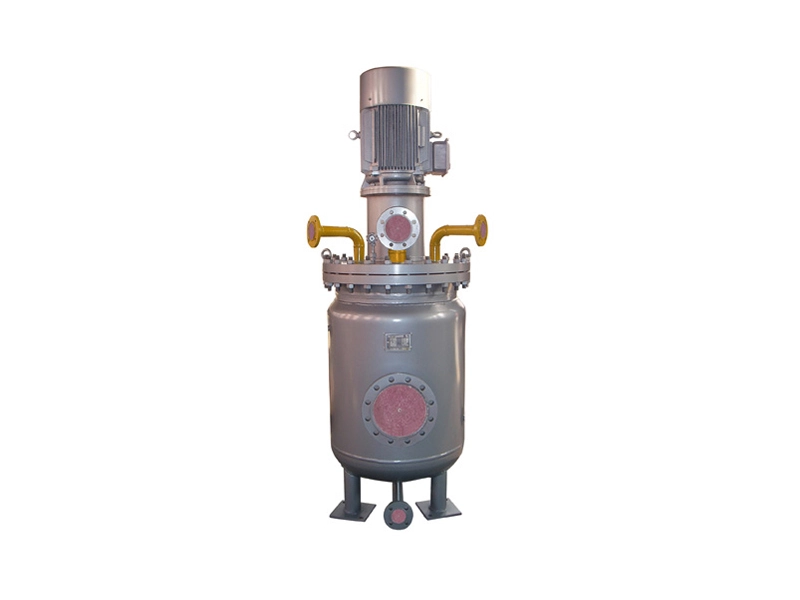
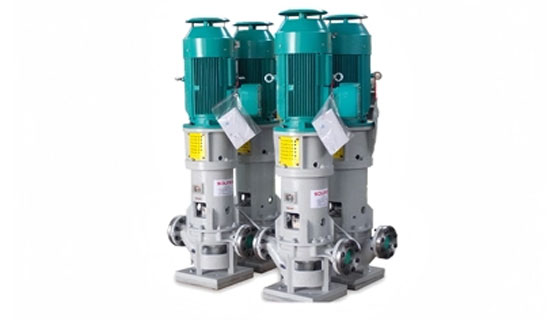
An OH3 pump is a vertical inline, single-stage overhung pump with a separate bearing bracket that supports compact piping arrangements while retaining an independent pump bearing system.
The OH3 configuration is most compelling when vertical inline geometry solves a real space or piping problem. Because suction and discharge nozzles are aligned, the pump can be installed directly in a line with a relatively small floor footprint. This arrangement may suit packaged units, congested process areas, utility modules and retrofit locations where a horizontal baseplate would interfere with access or equipment boundaries.
LUBOR publishes an OH3 screening range of up to 1,000 cubic meters per hour, up to 120 meters of head, temperatures up to 250 degrees Celsius and pressure up to 25 bar. Compared with the company's published OH2 envelope, the OH3 is positioned for a more limited hydraulic and thermal range. That does not make it a lesser pump; it means the design solves a different priority.
The vertical arrangement changes the maintenance questions. Confirm how the motor will be lifted, whether the rotating element can be removed without disturbing major piping, where technicians will stand, and how alignment will be checked. Review nozzle loads because the pump is part of the piping line rather than sitting on a long horizontal baseplate. Pipe supports should prevent the pump casing from becoming a structural anchor for the surrounding system.
Search results sometimes blur the boundary between a conventional API 610 OH3 and a magnetic-drive vertical inline pump. For clear page intent, a generic oh3 pump query should be answered by the API 610 OH3 page, while magnetic-drive variants should target explicitly sealless or API 685 terminology. This distinction helps buyers and search engines reach the configuration they actually need.
A published operating envelope is a preliminary boundary for screening pump families, not a substitute for a certified curve or engineering selection.
Catalog maximums are useful for excluding unsuitable configurations, but they can be misleading when treated as simultaneous capabilities. A pump family may list a maximum flow obtained at one speed and size, a maximum head achieved at a different configuration, and a maximum temperature that requires a specific material or seal plan. Procurement specifications should never combine every maximum into a single artificial duty point.
| Published LUBOR Screening Value | OH1 | OH2 | OH3 | Selection Meaning |
|---|---|---|---|---|
| Maximum flow | Up to 2,000 m3/h | Up to 2,600 m3/h | Up to 1,000 m3/h | OH3 may be screened out for very high flow before detailed review |
| Maximum head | Up to 250 m | Up to 250 m | Up to 120 m | OH1/OH2 cover a broader published head range |
| Maximum temperature | Up to 260°C | Up to 450°C | Up to 250°C | OH2 is the strongest published candidate for high-temperature service |
| Maximum pressure | Confirm by model and material | Up to 50 bar | Up to 25 bar | Pressure-temperature rating must be checked against casing and flange design |
| Primary layout benefit | Simple horizontal arrangement | Thermally stable centerline support | Compact vertical inline footprint | Layout and mechanical risk remain decisive |
After preliminary screening, request the actual curve for the proposed size, speed and impeller. Mark minimum, normal and rated flow, then review efficiency, power, NPSH required, minimum continuous stable flow and allowable operating region. A quoted pump that meets only the rated point may perform poorly during turndown, startup, parallel operation or control-valve changes.
The U.S. Department of Energy has noted that pump systems account for a significant share of industrial motor energy and recommends considering operation near the best efficiency point. As a practical screening rule, many engineers try to keep the duty reasonably close to BEP when the process permits, but the acceptable range must follow the selected pump design, API requirements and manufacturer data.
Multi-case hydraulic evaluation checks whether the pump remains stable, efficient and adequately protected at startup, normal, rated, minimum-flow and upset conditions.
A single rated point cannot describe a real process. The system may operate at reduced throughput, with different tank levels, with filters becoming fouled or with parallel pumps switching on and off. Each condition changes total dynamic head and the operating point on the pump curve. The specification should therefore include every credible case rather than one averaged duty.
For each case, provide suction pressure, discharge pressure or differential head, flow, temperature, density, viscosity and vapor pressure. Identify whether values are minimum, normal or maximum. If composition varies, include the range that affects density, corrosivity, solids content or vapor pressure. For hydrocarbons and hot liquids, NPSH margin should be reviewed with particular care because a small change in suction conditions can materially affect cavitation risk.
Control philosophy also changes selection. A throttled constant-speed pump sees a different operating pattern from a variable-speed pump. Parallel operation requires curve compatibility and stable sharing. A bypass or minimum-flow recycle may protect the pump but adds energy consumption and heat to the system. The chosen OH arrangement should be assessed together with the control method and system curve.
Where several configurations can meet the rated point, the best pump is often the one that handles the complete operating range with the least recirculation, throttling, vibration and maintenance exposure. This is a system decision rather than a catalog decision.
Mechanical reliability depends on controlling thermal growth, external nozzle loads and shaft alignment throughout installation and operation.
Hot service can move equipment, pipework and supports by several millimeters. That movement may be small relative to the plant, yet significant at a coupling or mechanical seal. An OH2 centerline-mounted casing is designed to manage casing growth more symmetrically, but the piping system must still be flexible and supported correctly. An OH3 inline casing can receive loads from both suction and discharge piping, so the line should not rely on the pump to correct misalignment.
Cold alignment is only the starting condition. The project should define installation tolerances, soft-foot correction, grout procedure, baseplate inspection and hot-alignment targets where applicable. Piping should be connected without forcing the nozzles into position. After piping is attached, shaft movement should be checked to identify strain introduced by the system.
For vertical equipment, confirm plumbness and support stiffness. The motor and bearing bracket create a tall assembly that can respond differently to vibration and external loads than a horizontal set. Access platforms, lifting points and structural resonance should be considered during layout—not after commissioning.
These mechanical details are often absent from a purchase description focused only on flow, head and material. Adding them early can prevent repeated alignment work, seal failures and disputes over whether the pump or the piping caused the problem.
Maintenance-led selection compares the labor, access, tools, spares and downtime required to inspect or replace the pump's wear components.
A plant with experienced horizontal-pump technicians, standard lifting equipment and established spare assemblies may prefer OH1 or OH2 even when an OH3 could reduce footprint. Another site may prioritize compact modules and have overhead lifting available, making the vertical inline arrangement practical. Neither choice is universally correct.
Ask how the seal, bearings, coupling and impeller will be accessed. Determine whether the motor must be removed, whether adjacent piping blocks component withdrawal and whether a full cartridge or rotating assembly can be exchanged. Review the weight of the heaviest maintenance lift and the path to the workshop. A maintenance drawing is often more informative than a catalog outline.
Spare-parts strategy matters as well. Standardized bearings, seals, couplings and instrumentation can reduce inventory. However, forced standardization can create a poor process fit. The objective should be to standardize where the risk is low while preserving the correct hydraulic and mechanical configuration for each service.
For critical continuous-duty pumps, compare the cost of one unplanned outage with the incremental cost of the more suitable arrangement. A centerline-supported OH2 may justify higher capital expenditure in hot service. Conversely, specifying it for a mild utility duty may add little value. Lifecycle reasoning should be tied to the actual failure consequence.
A scenario-based matrix converts project constraints into a transparent configuration preference that can be validated during technical bid evaluation.
| Project Scenario | Likely Starting Configuration | Why | Critical Verification |
|---|---|---|---|
| Moderate-temperature utility or process transfer with adequate floor space | OH1 | Simple horizontal arrangement may meet duty without unnecessary complexity | Temperature, pressure, pipe strain and alignment limits |
| High-temperature refinery or petrochemical process | OH2 | Centerline support better accommodates casing thermal growth | Pressure-temperature rating, seal plan, metallurgy and hot alignment |
| Compact skid or congested installation with inline piping | OH3 | Vertical footprint and inline nozzles reduce horizontal space | Maintenance clearance, motor lifting and nozzle loads |
| Very high flow above the published OH3 range | OH1 or OH2 | Broader published flow envelope | Actual curve, driver power and suction conditions |
| Temperature approaching 400°C | OH2 | Published OH2 range extends substantially higher | Material, flange class, seal system and thermal analysis |
| Retrofit with fixed inline nozzle centers | OH3, subject to review | Can fit existing line geometry | Foundation, structural support, access and actual hydraulic fit |
This matrix is a starting hypothesis, not an automatic selection algorithm. For example, a compact site may appear to favor OH3, but a high-temperature or high-head duty could exceed its suitable range. A moderate service may appear to favor OH1, but repeated thermal cycling and high outage cost could justify OH2. The final choice should be documented as a balance among hydraulic fit, mechanical risk, installation cost and maintainability.
A complete pump RFQ standardizes process, mechanical, testing and documentation requirements so suppliers quote the same duty and scope.
Begin with a controlled datasheet rather than a short email. State the applicable API 610 edition, project specifications and any purchaser amendments. Define the fluid, composition, hazardous properties, solids content, viscosity, density, vapor pressure and temperature range. Provide all operating cases and identify which point is rated.
Then define the installation. Include indoor or outdoor location, ambient range, elevation, hazardous-area classification, available utilities, nozzle orientation, baseplate or inline constraints, driver supply, speed-control method and expected operating hours. State whether the pump is new, a retrofit or part of a parallel set.
Mechanical requirements should cover casing and impeller materials, corrosion allowance, shaft and wear-component materials, mechanical-seal arrangement, bearing type, lubrication, coupling, guard, baseplate, drains, vents and auxiliary piping. Do not specify materials solely by generic family; connect the requirement to fluid composition, chloride concentration, temperature and corrosion data.
Testing and documentation should be explicit. Identify the required hydrostatic test, performance test, vibration acceptance, NPSH test if applicable, material certificates, inspection points, witness requirements, certified curves, general arrangement drawings, sectional drawings, data books and spare-parts lists. Clarify which documents are required with the quotation and which are due after order.
List minimum, normal, rated and maximum operating cases.
State NPSH available for each relevant suction condition.
Define the API edition and all purchaser-specific deviations.
Describe the exact layout, nozzle orientation and access constraints.
Specify hazardous-area and motor requirements.
Define materials from corrosion and temperature evidence.
State seal, bearing, lubrication and auxiliary-system requirements.
Identify inspection, testing and documentation deliverables.
Request guaranteed values and a deviation list.
Require a lifecycle-relevant spare-parts recommendation.
A complete RFQ lets LUBOR and other bidders return technically comparable proposals. It also reveals where a supplier has made assumptions. Those assumptions should be resolved before price comparison, because a low quotation based on a narrower scope is not necessarily the lowest project cost.
Technical bid evaluation compares hydraulic guarantees, mechanical design, scope, deviations, testing and lifecycle support before commercial normalization.
Start by confirming that every bidder selected the same operating cases and interpreted the rated point correctly. Compare proposed speed, impeller diameter, efficiency, absorbed power, driver margin, NPSH required, minimum continuous stable flow and allowable operating region. Look for selections positioned too close to the end of the curve or far from BEP during normal operation.
Next compare the mechanical scope. Review casing support, bearing arrangement, shaft stiffness, seal system, materials, nozzle rating, baseplate, coupling, guard, instrumentation and auxiliary piping. A proposal that omits a required seal system or monitoring package may appear less expensive but is not commercially equivalent.
Read the deviation list closely. A clear, limited deviation list is preferable to a proposal that silently assumes exceptions. Confirm the API edition because older webpage language or copied specifications can persist after standards change. The quotation should reference the edition required by the project and identify any clause-level deviations.
Finally, compare delivery documentation, testing, commissioning support, warranty conditions and spare-parts availability. LUBOR states that its pump manufacturing history extends back to 1958 and that it has experience with API pump production. Buyers should still verify current certificates, references, quality plans and project-specific capabilities during vendor qualification.
Selection errors occur when one visible parameter—price, footprint, maximum capacity or familiar type—overrides the complete system requirement.
Error 1: Choosing OH3 only because the floor footprint is smaller. Corrective action: draw the full maintenance envelope, including motor lift and rotating-element removal, then review piping loads and platform access.
Error 2: Choosing OH2 for every process service. Corrective action: quantify the actual thermal and reliability risk. Use OH1 where its simpler arrangement fully satisfies the duty and project requirements.
Error 3: Treating catalog maximums as one operating point. Corrective action: request a certified curve for the proposed size and check all cases, materials, pressure-temperature limits and driver power.
Error 4: Ignoring the system curve. Corrective action: calculate static and friction head across realistic operating conditions, then assess control-valve position, variable speed, parallel operation and minimum-flow protection.
Error 5: Allowing the pump to correct piping misalignment. Corrective action: support and align piping independently, connect without force and measure shaft movement after piping connection.
Error 6: Sending an incomplete RFQ. Corrective action: issue a structured datasheet and scope sheet, then require every bidder to identify assumptions and deviations.
Definition: These FAQs address the recurring engineering and procurement questions that arise when comparing API 610 overhung pump configurations.
An OH1 is generally foot-mounted, while an OH2 is centerline-mounted. The OH2 support arrangement better accommodates casing thermal growth and is commonly considered for hotter, more demanding process duties. The correct choice still depends on pressure, temperature, piping loads, reliability requirements and project specifications.
It normally uses less floor area because it is vertical and inline, but total space must include motor-removal height, maintenance access, valves, instruments and structural support. A compact installed footprint is useful only when the pump can also be maintained safely.
Not automatically. The published LUBOR OH3 temperature envelope is lower than its OH2 envelope, and the support geometries differ. Review the actual temperature, pressure, materials, thermal cycles, seal system and allowable nozzle loads before considering substitution.
OH1 often has a simpler support arrangement and may have a lower initial cost, but lifecycle cost depends on installation, energy, maintenance and downtime. For high-temperature service, an OH2 may be more economical over the equipment life if it reduces alignment and reliability risk.
Provide all flow-head cases, suction conditions, NPSH available, fluid properties, temperature and pressure ranges, materials, hazardous-area classification, driver requirements, nozzle orientation, space constraints, API edition, testing scope and documentation requirements.
No standard can compensate for an incorrect duty, poor system design, pipe strain, inadequate suction conditions or weak maintenance practices. API 610 provides a rigorous framework, but reliability still depends on correct selection, manufacturing quality, installation, commissioning and operation.
The best overhung pump configuration is the one that fits the hydraulic duty, thermal behavior, plant layout and maintenance strategy as a single engineered system.
Choose OH1 when a straightforward horizontal, foot-mounted arrangement adequately manages the duty. Choose OH2 when hot process conditions and thermal growth justify centerline support. Choose OH3 when vertical inline geometry solves a genuine layout constraint and the hydraulic range, piping loads and maintenance plan support that choice.
Do not allow one catalog number, one maximum value or one purchase price to decide the project. Compare all operating cases, certified curves, mechanical scope, access requirements, testing and deviations. LUBOR can use a complete project datasheet to review the suitable API 610 arrangement and prepare a configuration-specific proposal.
The following primary references support further review of API pump standards, industrial pump-system efficiency and centrifugal-pump engineering.
American Petroleum Institute, API 610 / ISO 13709 information: https://www.api.org/products-and-services/standards/important-standards-announcements/rp697
ISO 13709:2009 standard overview: https://www.iso.org/standard/41612.html
U.S. Department of Energy, Improving Pumping System Performance: https://www.energy.gov/sites/prod/files/2014/05/f16/efficient_centrifug_pumps.pdf